CCTV on Ships: Components, Placement & Certification
Oct 21
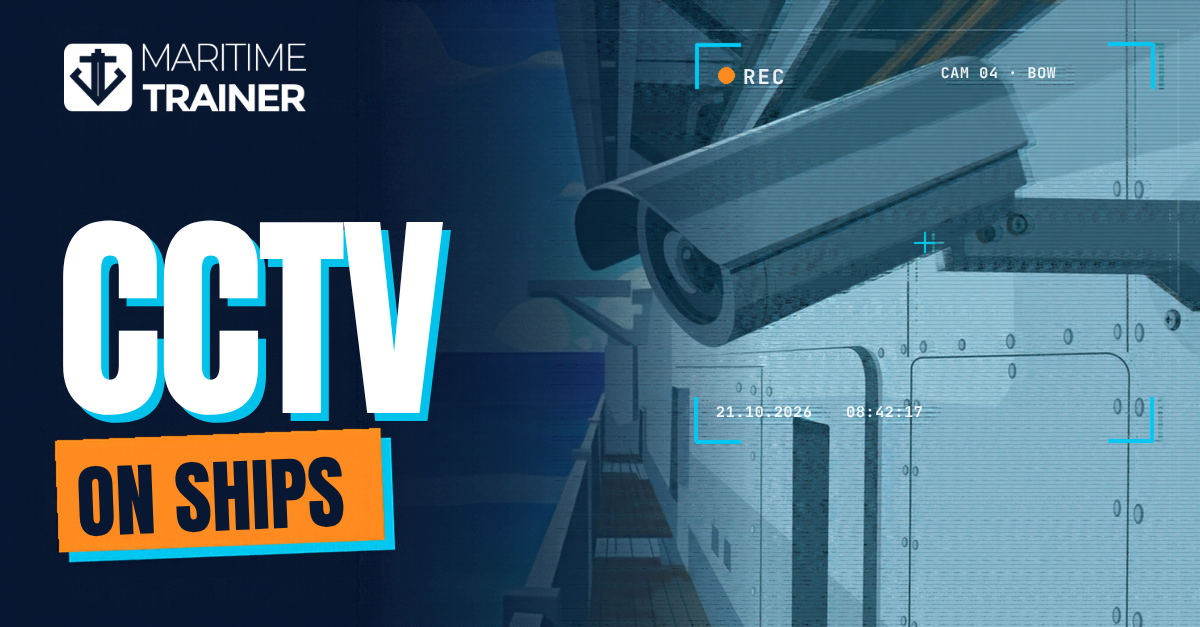
CCTV on ships is a marine-grade video surveillance system that gives continuous visibility of decks, cargo areas, machinery spaces and access points. Cameras send video over the ship's IP network to a central NVR, operators watch live feeds from the bridge or control room, and shore teams can view remotely. It is mission-critical to vessel safety, security and operational control.
What is CCTV on ships?
In today's maritime world, CCTV systems
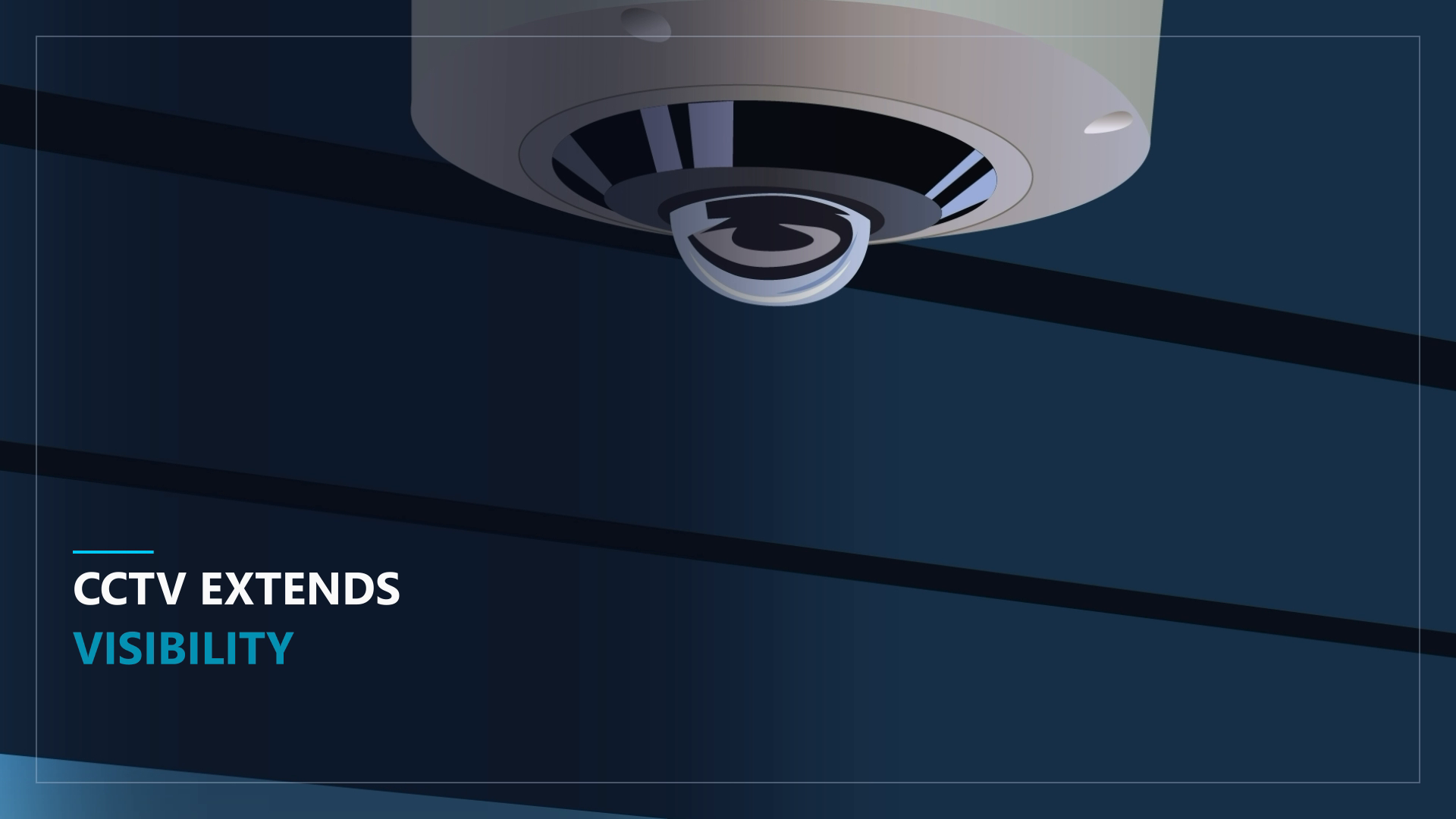
have become the visual backbone of ship safety and surveillance. They enable
real-time monitoring, continuous recording and stronger onboard security
management, from protecting crew members in hazardous zones to supervising
cargo loading, storage and unloading.
Modern systems are built for marine
conditions. They are designed to withstand salt exposure, vibration, humidity
and extreme weather at sea.
Why is CCTV important onboard ships?
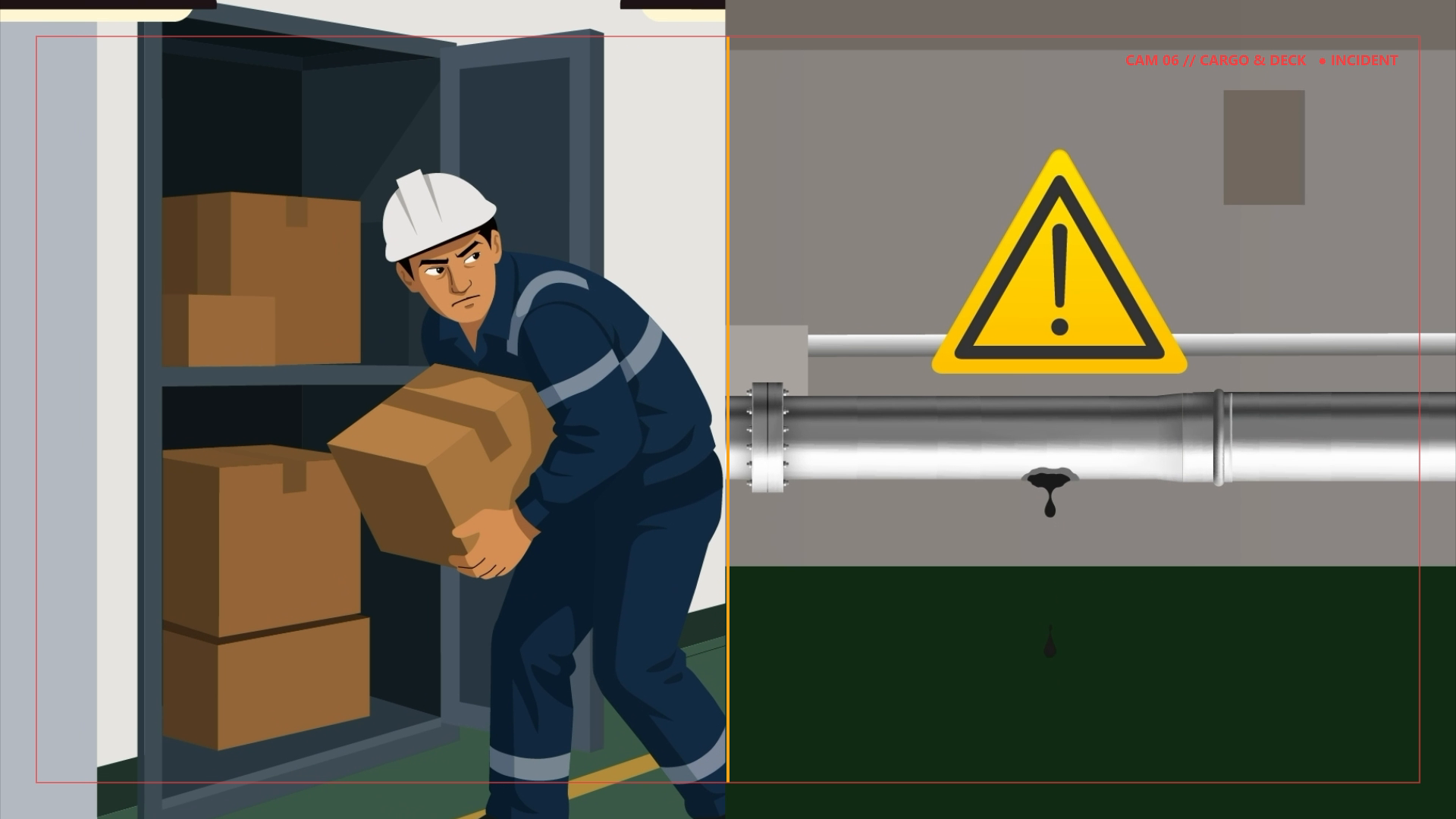
CCTV provides continuous visibility in areas where human presence is limited. It matters in four ways:
Prevents unauthorized access, piracy threats and intrusion into restricted zones.
Monitors dangerous workspaces and helps teams respond quickly in emergencies.
Reduces theft, damage
and mishandling during operations.
Lets fleet management
teams onshore monitor vessel activity securely from anywhere in the world.
1. The camera lens and sensor capture the scene.
2. Light is converted into electrical signals.
3. The signals are processed into a digital video format.
4. The video is compressed using formats like H.264 or H.265 for efficient storage and transmission.
5. Data moves through the ship's IP-based network.
6. Footage is stored in the central Network Video Recorder (NVR).
7. Live video appears instantly on monitoring screens, while recorded footage stays available for playback and investigation.
Systems can record continuously or only when motion is detected.
What are the main components of a ship CCTV system?
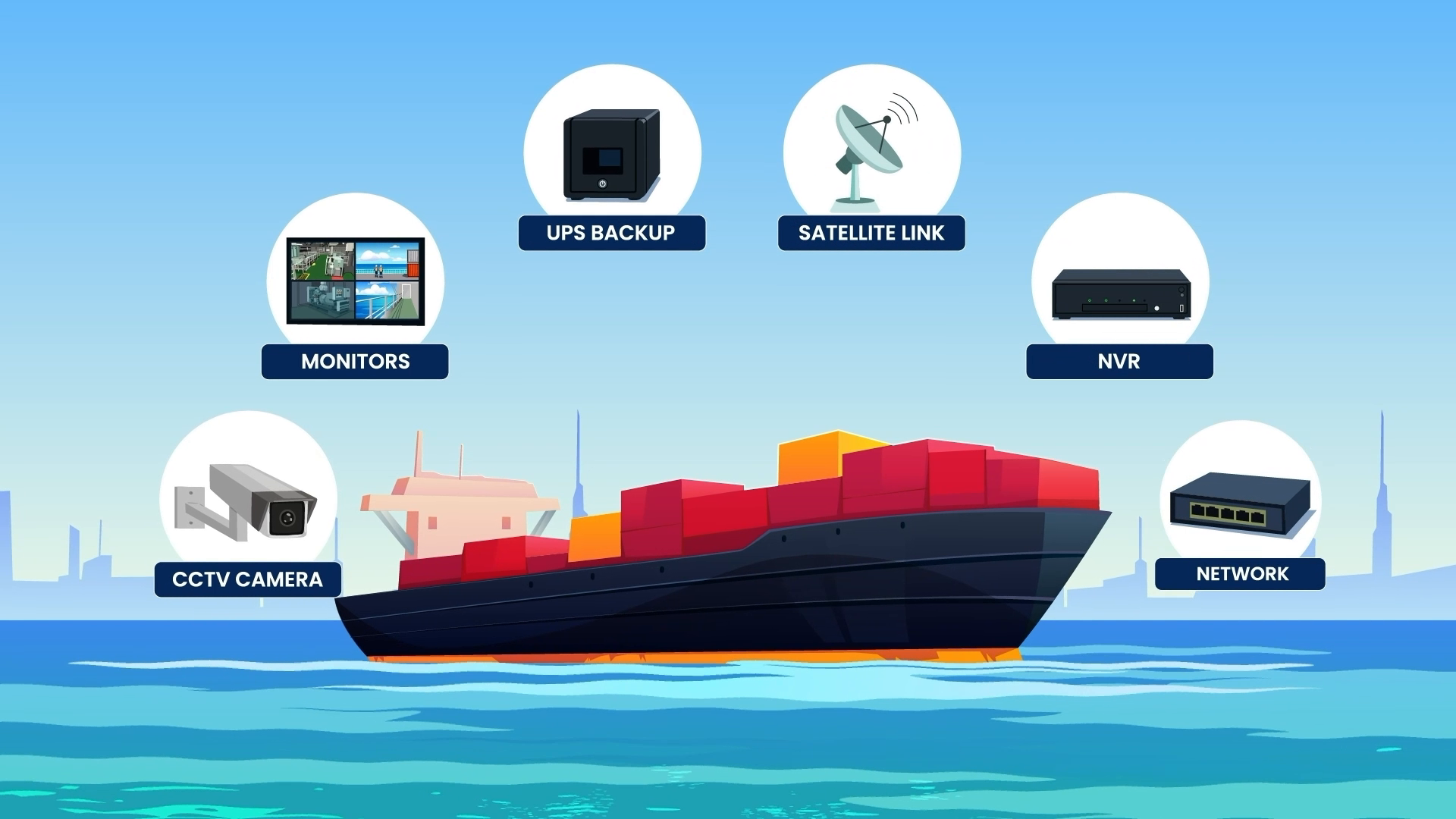
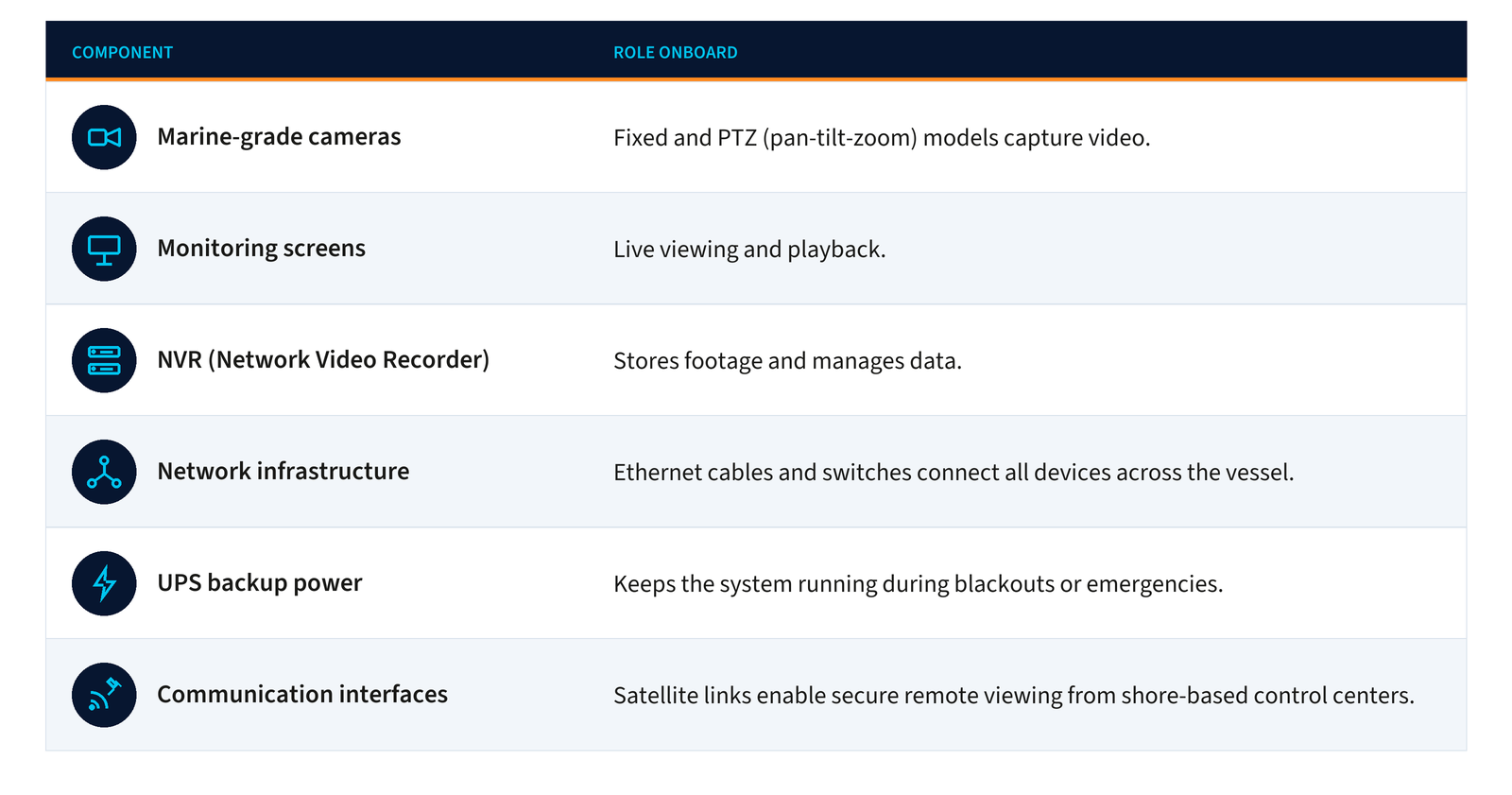
All components must meet marine-grade standards for humidity, vibration and temperature resistance. Together: cameras capture video, networks transmit data, the NVR stores recordings, screens display live feeds and remote users access footage securely from shore. That creates complete visibility across the vessel.
How will AI change ship CCTV?
The future of CCTV is intelligent automation. AI systems can detect threats automatically, identify unauthorized access, analyze unsafe crew behavior and generate real-time alerts, reducing dependence on manual monitoring. The result: smarter ships and safer operations.
What you will learn in the course
This article covers the fundamentals. The Introduction to CCTV on Ships course goes deeper into the questions crews and shore teams face every day:
• Where to place cameras to remove blind spots
• How to manage recording so footage is there when you need it
• Daily and weekly checks that keep the system reliable
• Which certifications and standards apply
• How CCTV supports investigations and emergency response
• The limitations of CCTV, and how to plan around them
Key takeaways
- CCTV is not an optional extra.
It is mission-critical to vessel safety, security and operational control.
- Every component plays an
essential role, from image capture to remote shore access.
- With AI and smart technologies,
CCTV is becoming an even more powerful tool for maritime safety.