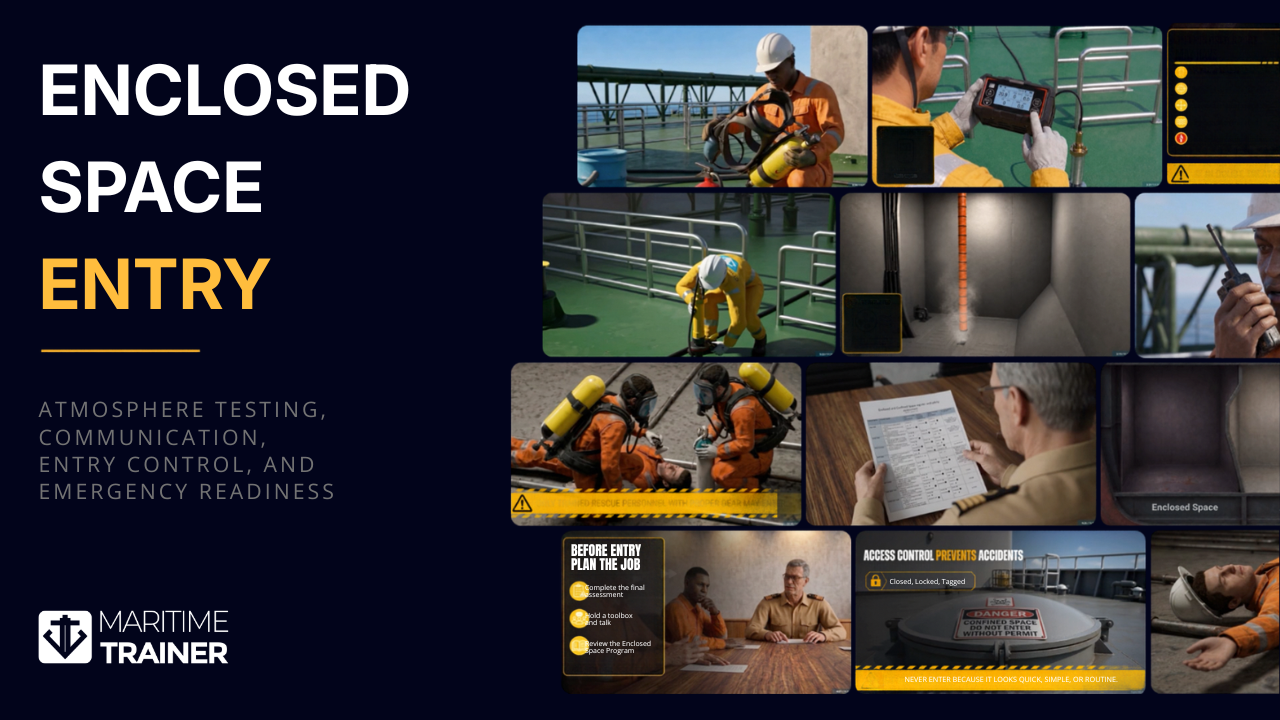
Enclosed Space Entry Onboard Ships: Hazards, Safety Protocols & Testing Standards

Sep 22

Enclosed space entry remains one of the most dangerous routine operations conducted on merchant vessels. Despite stringent international safety management (SMS) guidelines, atmospheric hazards inside confined compartments continue to cause severe accidents and fatalities at sea.

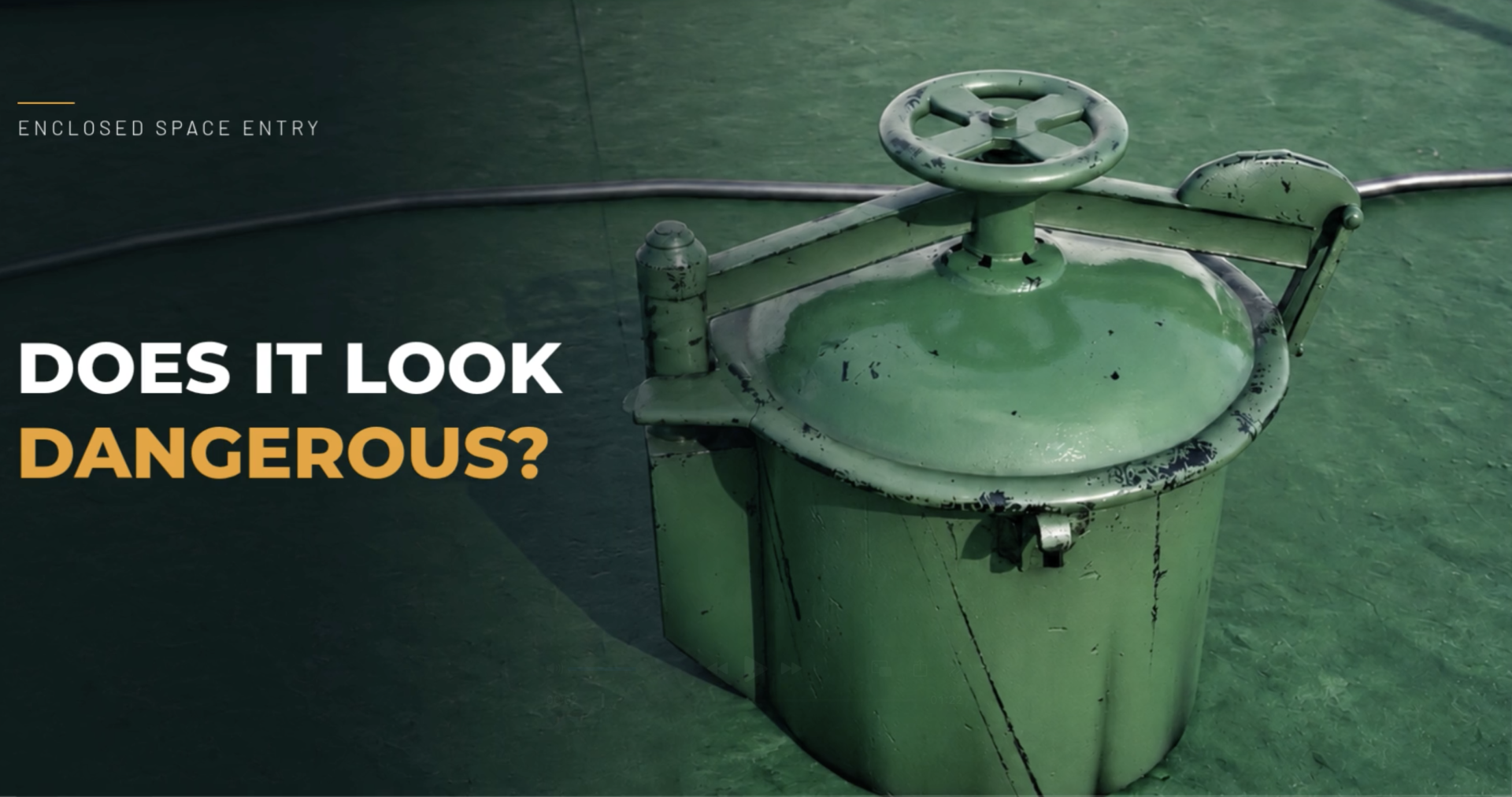
 An enclosed space does not need to look dangerous to be fatal. Whether conducting routine tank inspections, cargo hold maintenance, or pipe repairs, understanding what lies beneath the surface—and adhering strictly to permit-to-work protocols—is essential to ensuring every crew member returns home safely.

 In this comprehensive guide, we examine how to identify enclosed spaces, assess hidden atmospheric and physical risks, carry out correct gas testing procedures, and implement life-saving emergency controls.   

What Defines an Enclosed Space Onboard a Vessel?


Under maritime safety standards, an enclosed space is not defined solely by its size. A compartment must be treated as an enclosed space if it exhibits any of the following characteristics:

Restricted Entry/Exit: 

Limited openings or difficult access points.

Inadequate Ventilation: 

Natural or artificial air movement is restricted.

Design Limitations: 

It is not designed for continuous human occupancy.

Common Enclosed & Adjacent Spaces

Dangerous spaces onboard include, but are not limited to:

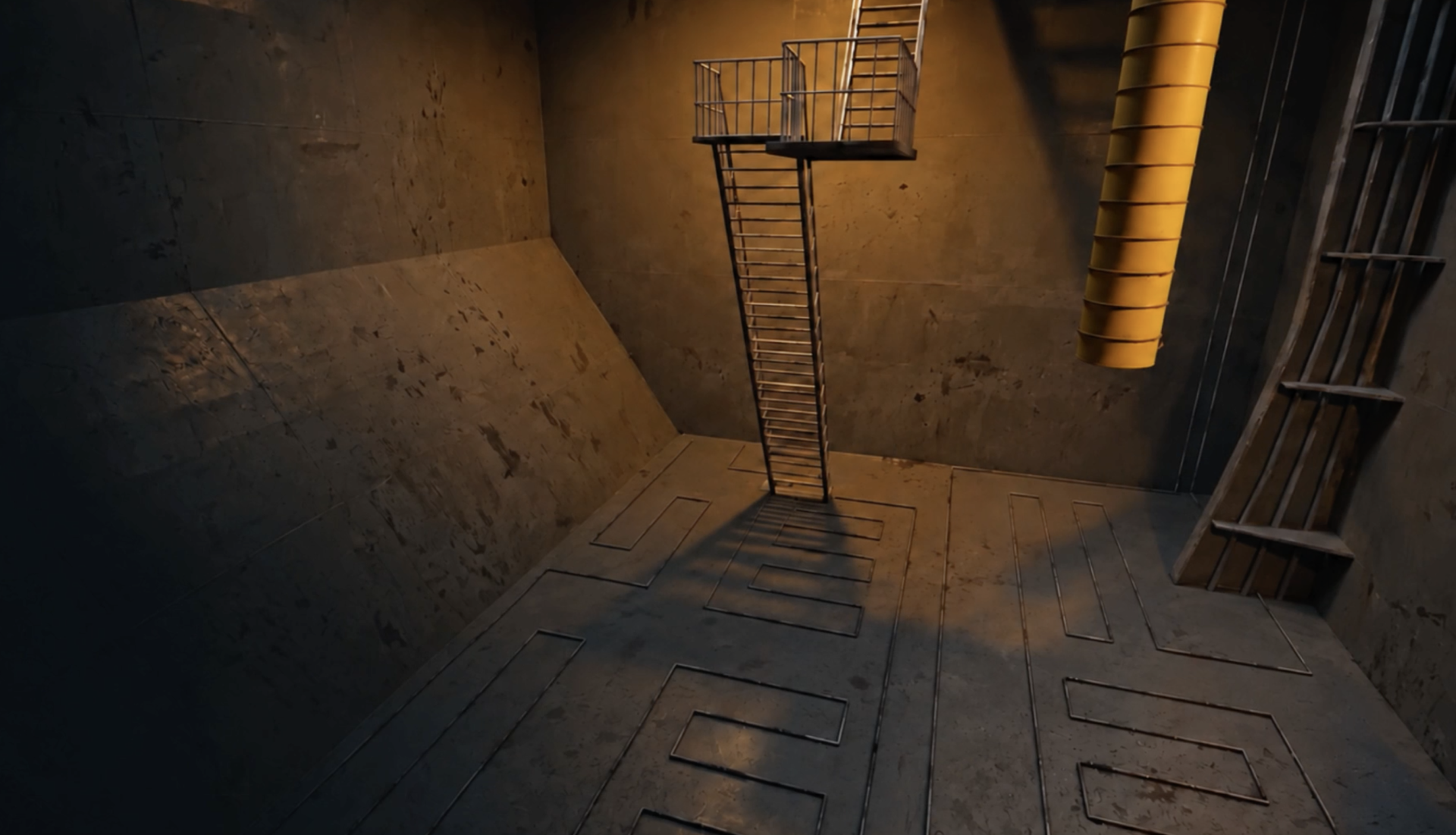
Cargo tanks and cargo holds

Ballast tanks, void spaces, and cofferdams

Duct keels, fuel tanks, and chain lockers

Beware of Connected Spaces: Hazardous gases can easily migrate into connected or adjacent compartments through unsealed pipes, open vents, structural failures, or shared boundaries. Always inspect the surrounding spaces before commencing any entry.

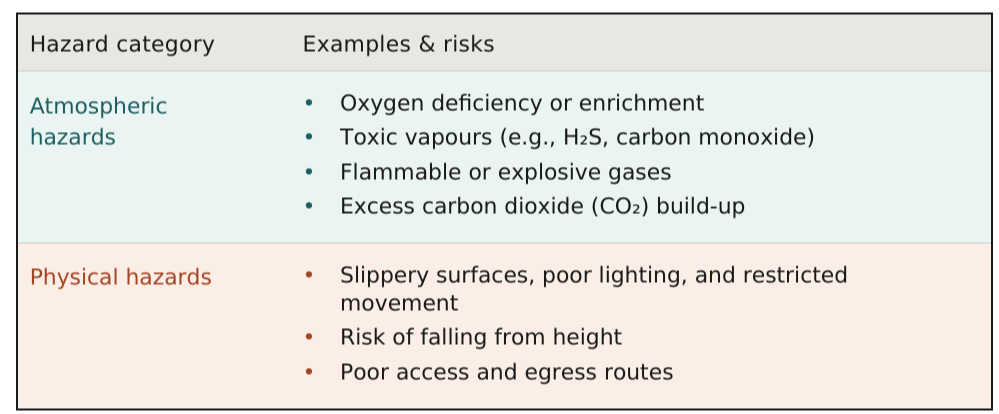
Key Hazards in Enclosed Spaces

Enclosed space risks fall into two major categories:
4 Essential Conditions Before Any Entry Is Permitted


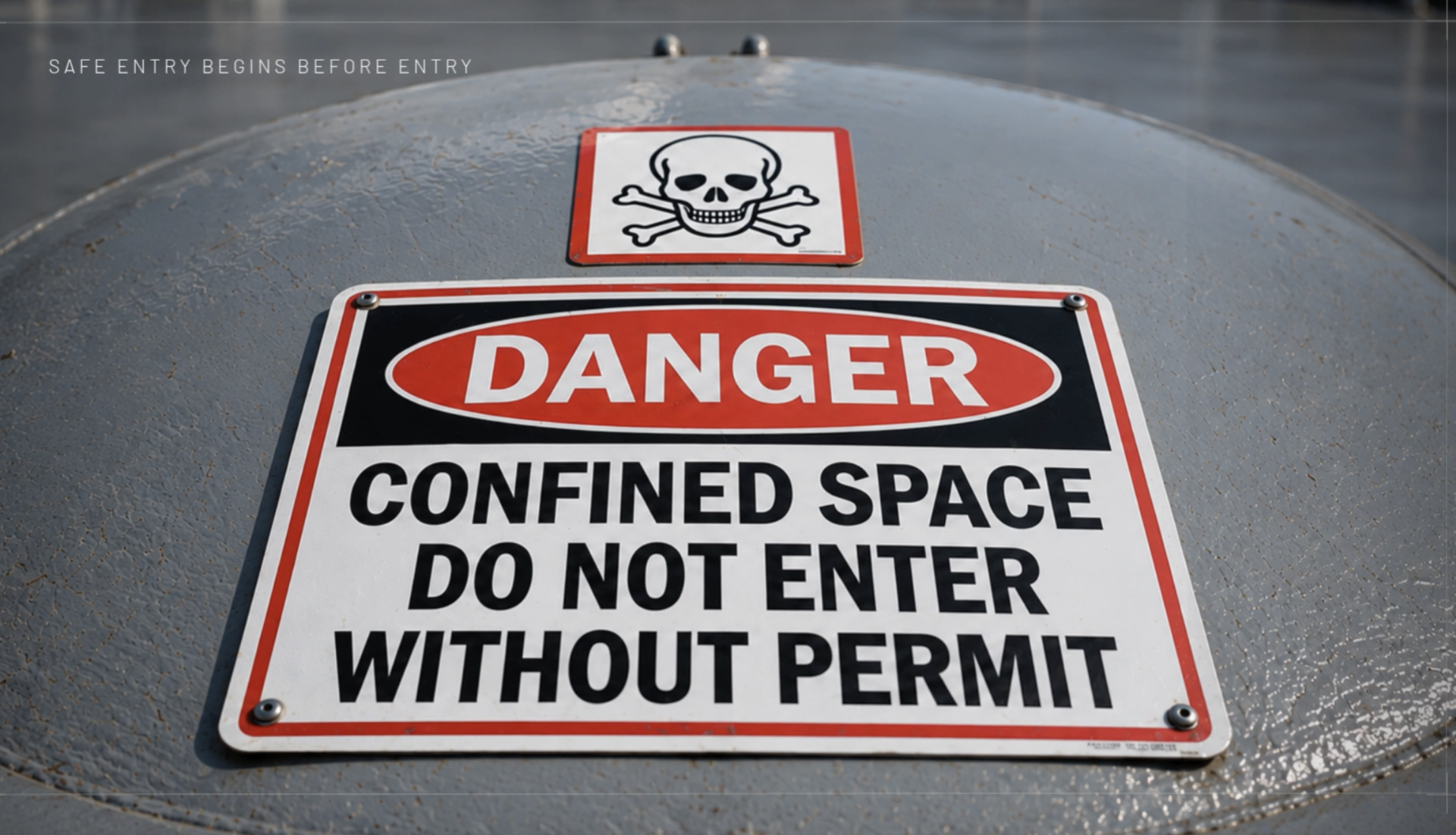
To prevent unauthorized access, all entrances to unused enclosed spaces must be locked, tagged out, or clearly marked with warning signs. No job is ever too quick, simple, or routine to skip pre-entry procedures.


Entry is strictly prohibited unless all four conditions are met: 

Master’s Authorization:

 Entry must be formally authorized by the Master or a nominated responsible person.

Preliminary Assessment: 

A competent person must assess all hazards associated with the space and its surroundings

Thorough Ventilation: 

Mechanical or natural ventilation must be conducted to flush out gases and ensure adequate oxygen levels throughout the entire compartment.

Atmospheric Testing: 

The atmosphere must be tested using calibrated multi-gas detectors, confirming safe gas thresholds.

Step-by-Step Enclosed Space Entry Protocol

01.

Risk Assessment & Toolbox Talk


Hold a dedicated toolbox talk with the entry team. Review the vessel's Enclosed Space Register to understand the layout, access points, connected/adjacent hazards, and the emergency response plan.

02.

Permit-to-Work & Line Isolation

Complete the Enclosed Space Entry Permit per company procedures. Ensure all connecting pipelines, valves, and inert gas inlets are physically isolated to prevent accidental flooding or gas leakage during the operation. Note: Permits are generally valid only for normal working shifts (maximum 8 hours). Work must immediately stop if the permit expires.

03.

Rigorous Atmosphere Testing Standards

Single-point testing is insufficient. Because heavy gases sink and light gases rise, air samples must be taken at multiple depths and through various openings.

 The 10-Minute Waiting Rule:
Mechanical ventilation must be stopped for at least 10 minutes before taking pre-entry readings. This prevents fresh incoming air from masking localized pockets of dangerous gas.

Required Safety Equipment at the Entrance

Before anyone crosses the hatch, the following equipment must be inspected, functional, and placed immediately adjacent to the entrance:

  • Self-Contained Breathing Apparatus (SCBA / BA sets) & spare cylinders
  • Personal gas detectors and calibrated portable gas detectors
  • Intrinsically safe communication devices (radios)
  • Emergency Escape Breathing Devices (EEBD)
  • Rescue davit, harness, stretcher, and oxygen resuscitator
  • Explosion-proof flashlights and portable fire extinguishers

Dedicated Attendant Role

A dedicated watchkeeper/attendant must remain stationed at the entrance at all times while personnel are inside. The attendant must NEVER leave the post or enter the space. Continuous communication must be maintained between the attendant, the entry team, and the bridge/watchkeeping officer.


Emergency Response: Why Instinct Can Be Fatal

NEVER
rush inside to save a colleague!


Over 50% of enclosed space fatalities occur when untrained or unprotected crew members rush into a space on instinct to rescue an unconscious colleague, instantly becoming victims themselves.

In the event of an emergency:


  1. Raise the alarm immediately.
  2. Inform the Master and mobilize the designated vessel Emergency Rescue Team.
  3. Only trained rescue personnel wearing tested breathing apparatus (SCBA) may enter.


A brain deprived of oxygen for more than 5 minutes suffers irreversible damage or death. Regular, realistic onboard rescue drills are critical to ensuring the crew reacts swiftly without creating secondary casualties.   


Frequently asked questions

How long is an Enclosed Space Entry Permit valid onboard?

An Enclosed Space Entry Permit is typically valid only for the duration of the working day/shift and should not exceed 8 hours. If work is delayed or exceeds this period, a new permit and atmosphere re-test are required

Why must ventilation be stopped 10 minutes before gas testing?

Stopping ventilation for 10 minutes allows the internal atmosphere to stabilize. Continuous air blowing can create localized fresh-air pockets, giving false safe readings on testing instruments while toxic gas pockets remain hidden elsewhere.

What should be done if crew members leave the enclosed space for more than 30 minutes?

If personnel vacate the space for longer than 30 minutes (e.g., for meal breaks), the space must be re-ventilated and the atmosphere re-tested before any re-entry is permitted.

 Upgrade Your Fleet's Safety Culture with Maritime Trainer


Compliance is more than checking a box—it is about training seafarers to make the right decisions under pressure. Maritime Trainer’s digital Enclosed Space Entry Course combines realistic shipboard scenarios with interactive learning modules to ensure your officers and ratings recognize hidden atmospheric hazards, control entry permits, and execute safe emergency responses.