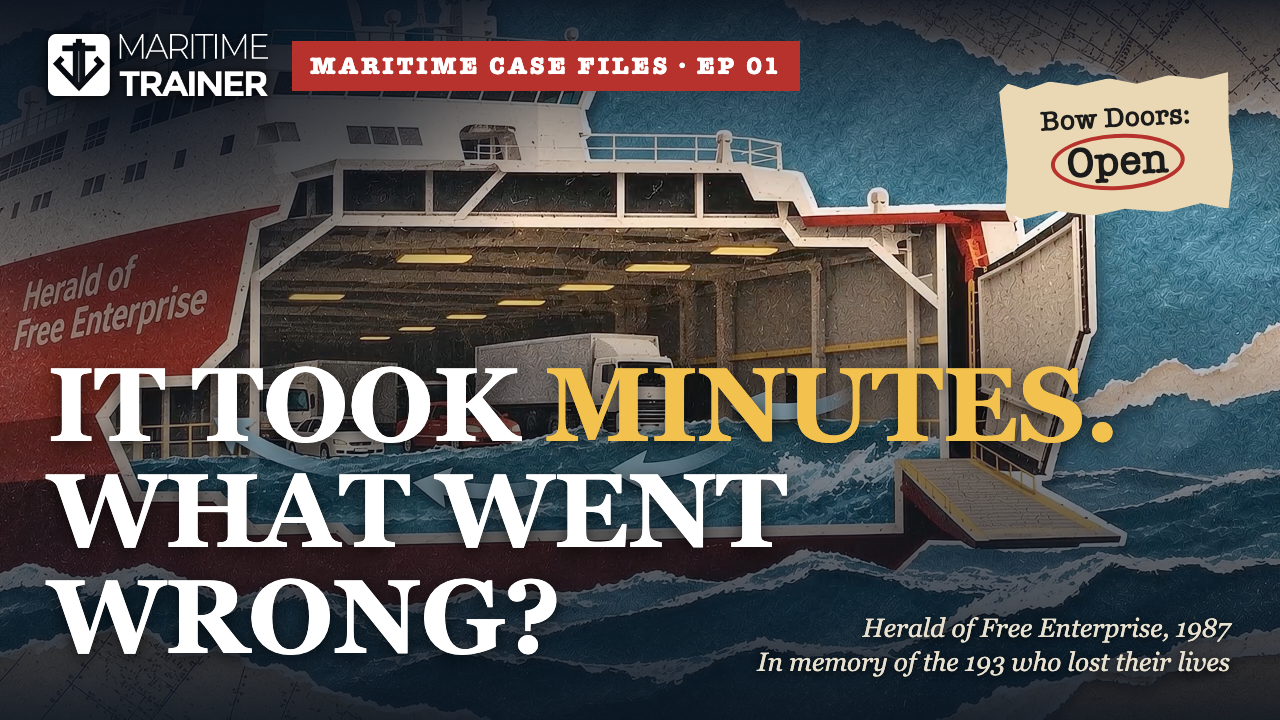
Herald of Free Enterprise (1987): How One Open Door Became a System Failure

Nov 11

On 6 March 1987, the passenger and vehicle ferry Herald of Free Enterprise departed from the port of Zeebrugge, Belgium. It was supposed to be a routine crossing. But a critical safety check had been missed: the ship's bow doors had been left open as it sailed out of the harbour.

Within minutes, the ferry lost stability and capsized. 193 people lost their lives.


What happened

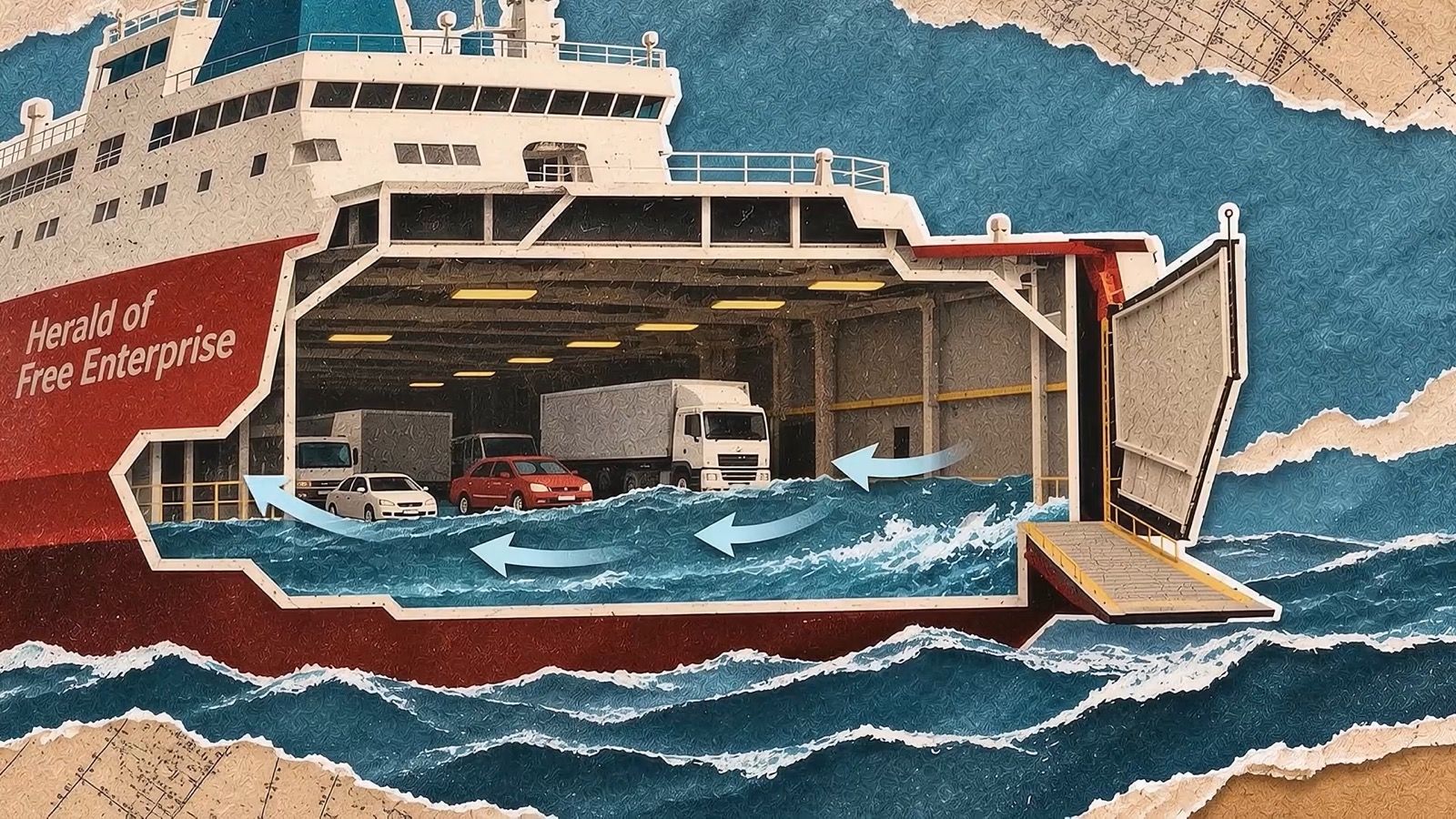
The Herald of Free Enterprise was a roll-on/roll-off (ro-ro) ferry, designed to carry passengers and vehicles. Vehicles are driven directly onto a large, open deck through doors in the bow.

As the vessel left Zeebrugge and accelerated, seawater rushed in through the open bow doors and spread rapidly across the vehicle deck. On a large open deck, water is free to move from side to side. Once it does, a ship's stability can disappear very quickly. The ferry capsized within minutes of leaving the harbour.

Why it was not just one mistake: a systemic failure
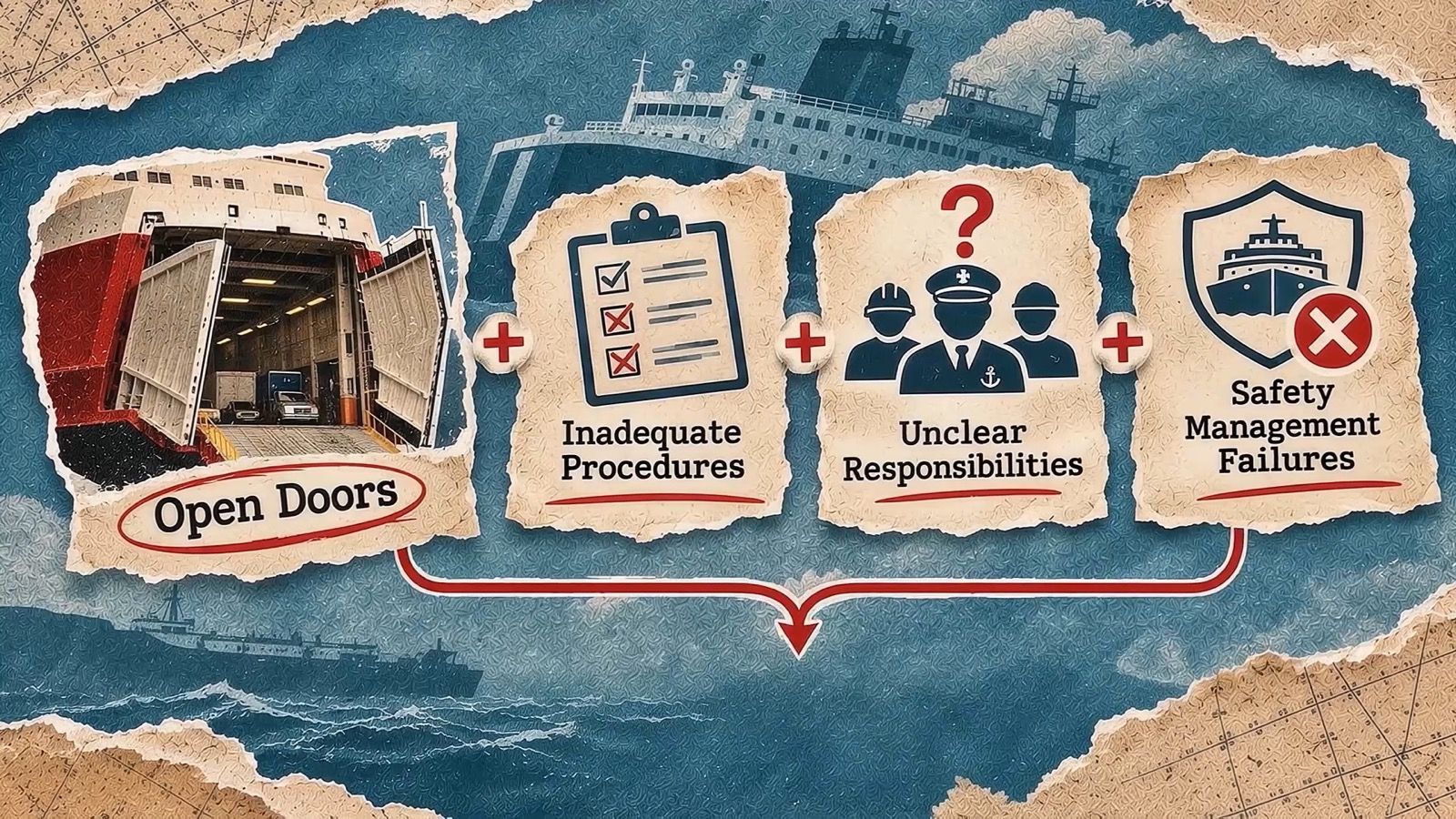
It would be easy to say the disaster was caused by a door that was not closed. The official investigation found a more troubling picture. The tragedy was not the result of one mistake alone. Inadequate procedures, unclear responsibilities, and failures in safety management had all contributed.

Open doors:

the immediate cause. The ship sailed with the bow doors open.

Inadequate procedures: 

a critical check was missed, and the system did not catch the omission before departure.

Unclear responsibilities:

it was not clear enough who was responsible for confirming that the check was done.

Safety management failures:

the wider safety management system did not prevent the omission or catch it in time.

The doors were the last link in a chain, not the only one.

Lessons that still apply

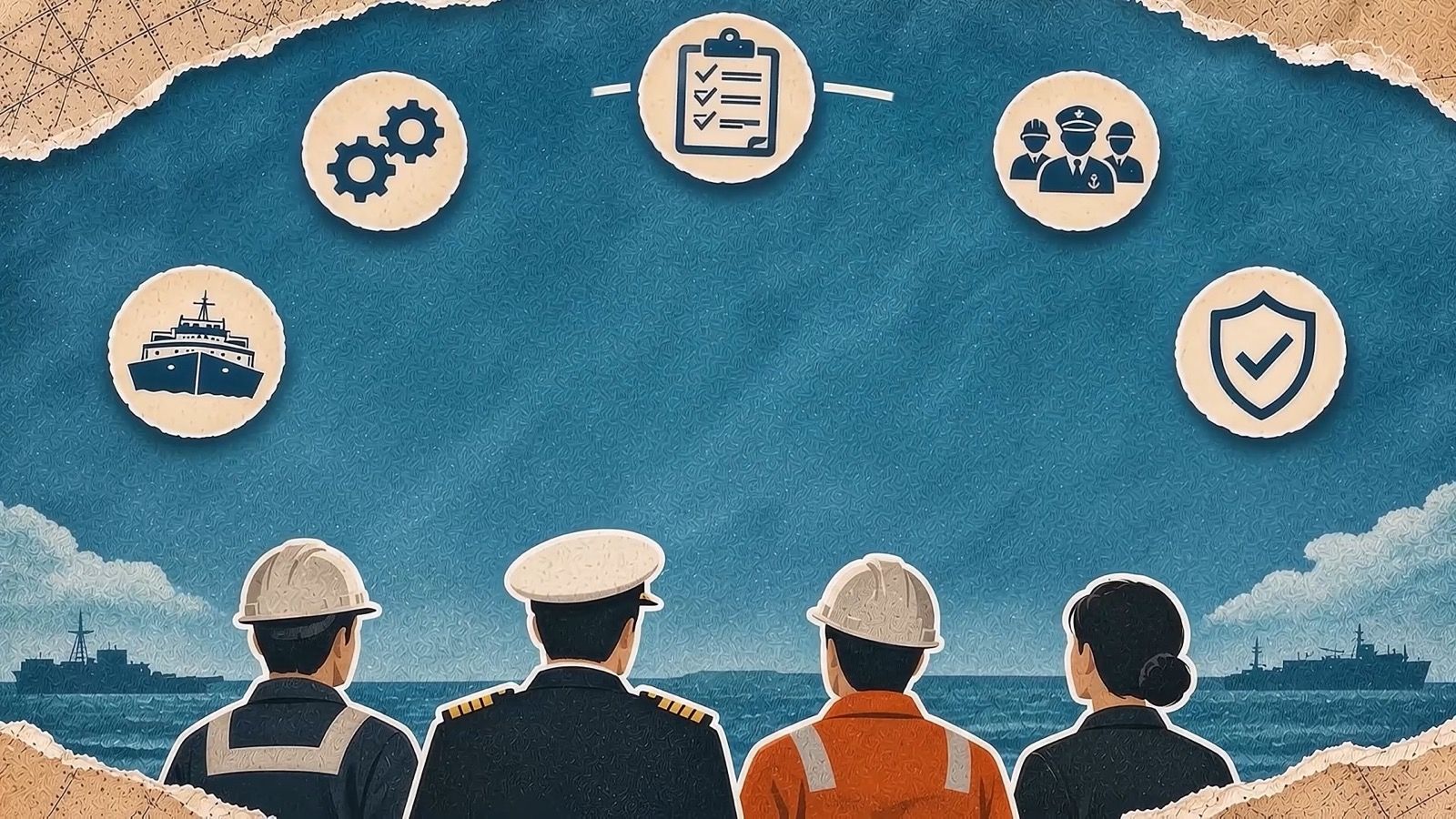
Safety is not just one person's responsibility. It is a system. A well-run system makes the right action the default and makes mistakes visible before they become accidents. That means:

  • Procedures that are clear, practical and actually followed.
  • Roles that are unambiguous: everyone knows who is responsible for what.
  • Verification of critical checks, so that no single person's omission goes unnoticed.
  • Culture that treats safety as shared responsibility, not individual blame.

Three questions for your next safety meeting
  1. Who confirms critical checks on your vessel, and how is it verified?
  2. Can the bridge see the status of the check, or only hear about it?
  3. If one person misses a step, what catches it?

Frequently asked questions

What was the Herald of Free Enterprise disaster?

On 6 March 1987, the ro-ro passenger ferry Herald of Free Enterprise capsized shortly after leaving Zeebrugge, Belgium. 193 people lost their lives.

What caused the Herald of Free Enterprise to capsize?

The ship left harbour with its bow doors open. Seawater flooded the vehicle deck and the ship lost stability. The investigation also identified inadequate procedures, unclear responsibilities and failures in safety management.

Was it one person's fault?

No. The investigation described a combination of factors, which is why the key lesson is that safety is a system, not one person's responsibility.

Sources


 • UK Department of Transport, Formal Investigation, Report of Court No. 8074 (1987) 

 • UK Marine Accident Investigation Branch (MAIB)