Safe Use of Lifting Appliances and Equipment Onboard Ships: Standards, Inspections & Operational Protocols
Sep 24
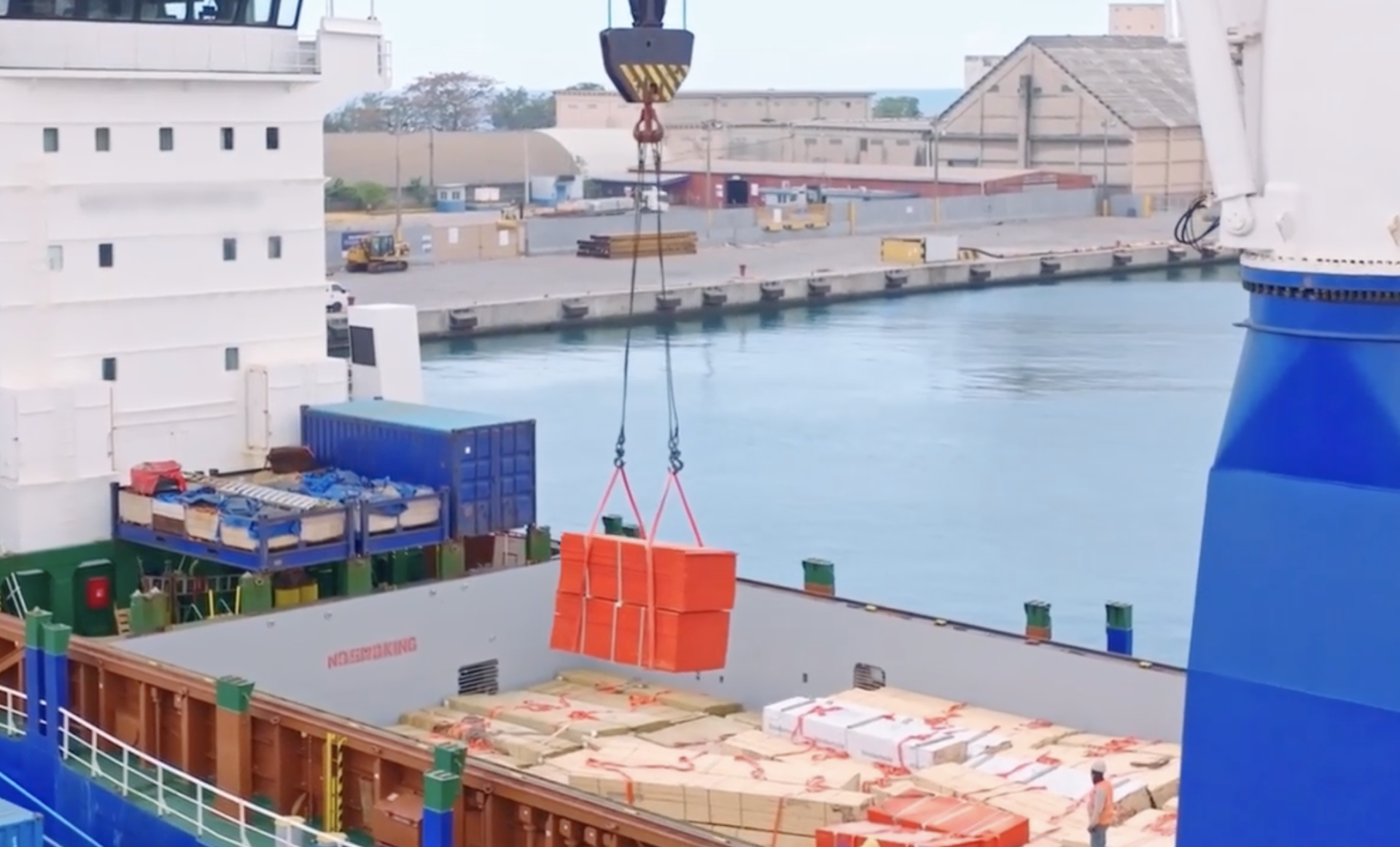
Lifting operations are at the heart of maritime logistics, vessel maintenance, and daily deck activities. From handling heavy engine components to transferring cargo, stores, and bunkering hoses, lifting equipment is essential for keeping a ship operational. However, when lifting appliances or loose gear fail, the consequences can be catastrophic—resulting in severe injuries, costly vessel damage, or operational downtime.
Ensuring the safe use of lifting appliances requires a combination of strict regulatory compliance, routine inspections, proper technical maintenance, and clear communication among the crew.
In this comprehensive guide, we examine the legal framework governing shipboard lifting equipment, differentiate between lifting appliances and loose gear, outline essential inspection and testing schedules, and break down standardized hand signals.
The Legal Framework: Regulatory Standards & Key Definitions
Shipboard lifting operations are strictly regulated by international maritime standards, including SOLAS Regulation II-1/3-13, IMO circulars, national legislation, and classification society rules. To maintain compliance and operational clarity onboard, crew members must understand key regulatory definitions:
Any fixed or portable shipboard machinery designed for vertical and horizontal transit of loads (e.g., deck cranes, engine room cranes, provision davits).
Detachable equipment used to attach the load to a lifting appliance (e.g., shackles, slings, blocks, turnbuckles)
The maximum static load approved for a lifting appliance or item of loose gear to lift at a specific radius under defined conditions.
An authority-approved expert qualified to perform thorough examinations and load tests.
An authorized individual appointed by the Master or gear owner with technical background to perform routine inspections and maintenance.
A comprehensive visual inspection performed annually (and after load tests) by a competent person.
Shipboard Lifting Appliances: Types, Inspections & Load Testing
Lifting appliances span various operational areas on a ship, including cargo deck cranes, derricks, hatch cover gantry cranes, engine room overhead cranes, provision cranes, hose handling davits, and personnel-handling cranes.
Fraud in maritime operations takes many forms, blending traditional document tampering with modern digital manipulation.
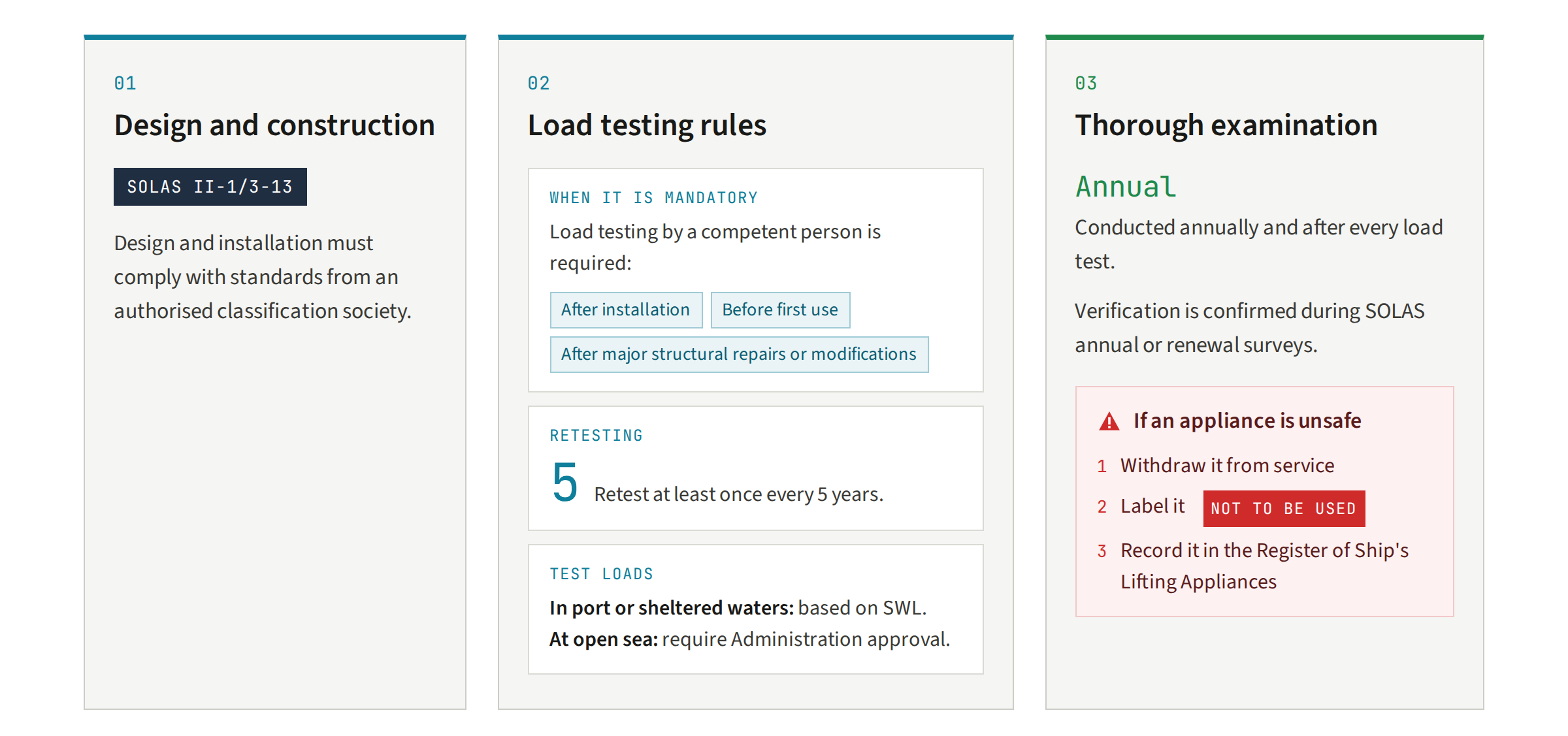
Critical Pre-Use Inspection Points:
-
Inspect pedestals, jibs, foundations, and supporting welds/bolts for corrosion or structural defects.
-
Examine winches, bearings, hydraulic/pneumatic cylinders, and brake systems.
-
Verify safety switches, limit switches, and protection devices
-
Ensure all wire ropes hold valid certification and unique identification.
Loose Gear Standards: Identification, Types & Testing
Loose gear acts as the direct interface between the load and the crane hook. Because loose gear is subject to dynamic wear and stress, strict certification and marking rules apply.
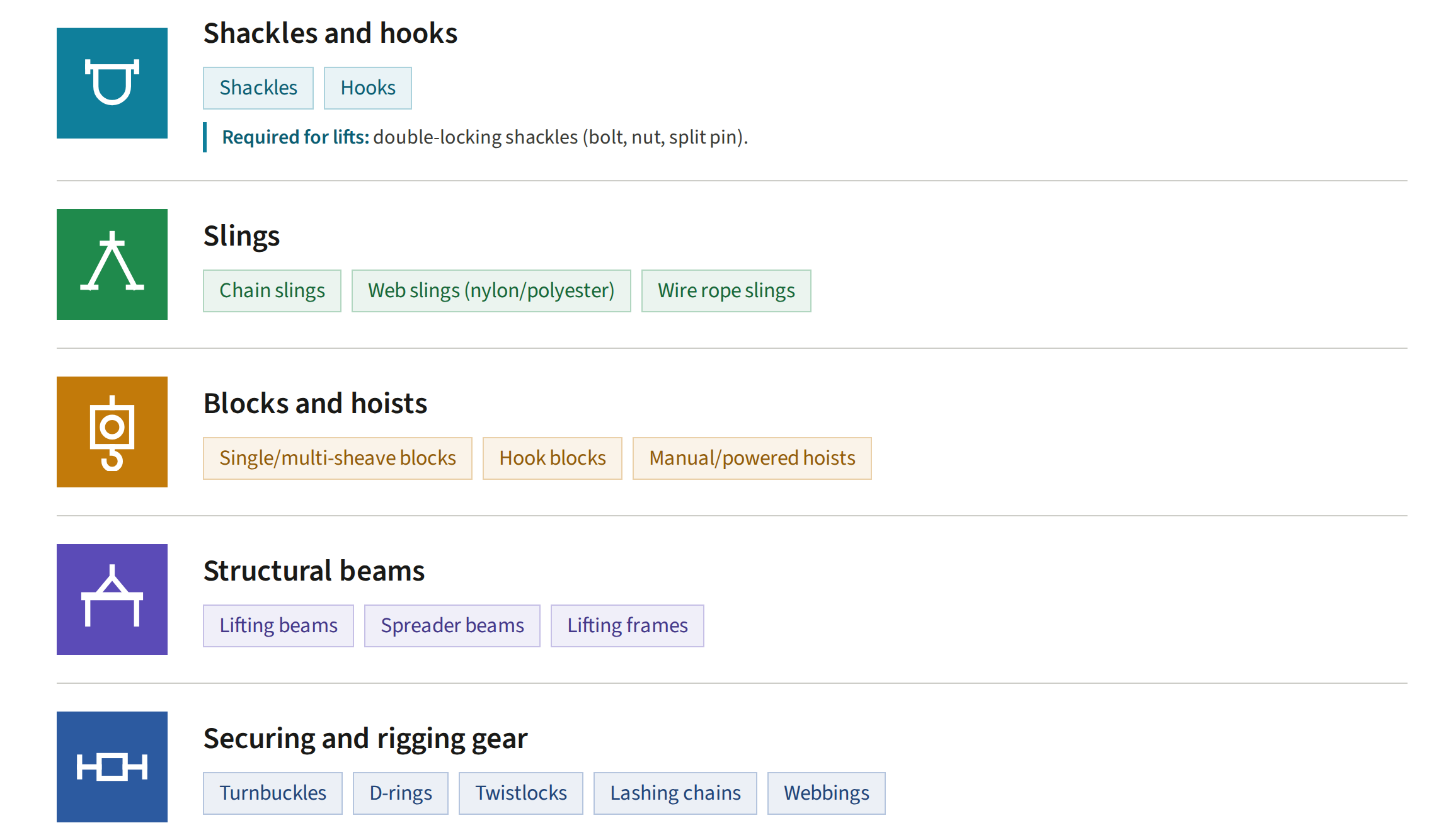
Loose Gear Safety Rules:
All loose gear must undergo proof testing by a competent person and be permanently marked with a unique ID and its Safe Working Load (SWL). Specialized components (e.g., ramshorn hooks, lifting beams) must also display sling angles or tare weights.
Only use double-locking shackles (bolt, nut, or split pin) for material or personnel lifts. Standard shackles are acceptable only for stationary loads.
U-bolt type clamps are not permitted for lifting equipment; only clamps with two gripping surfaces are allowed.
Roles & Responsibilities in Lifting Operations
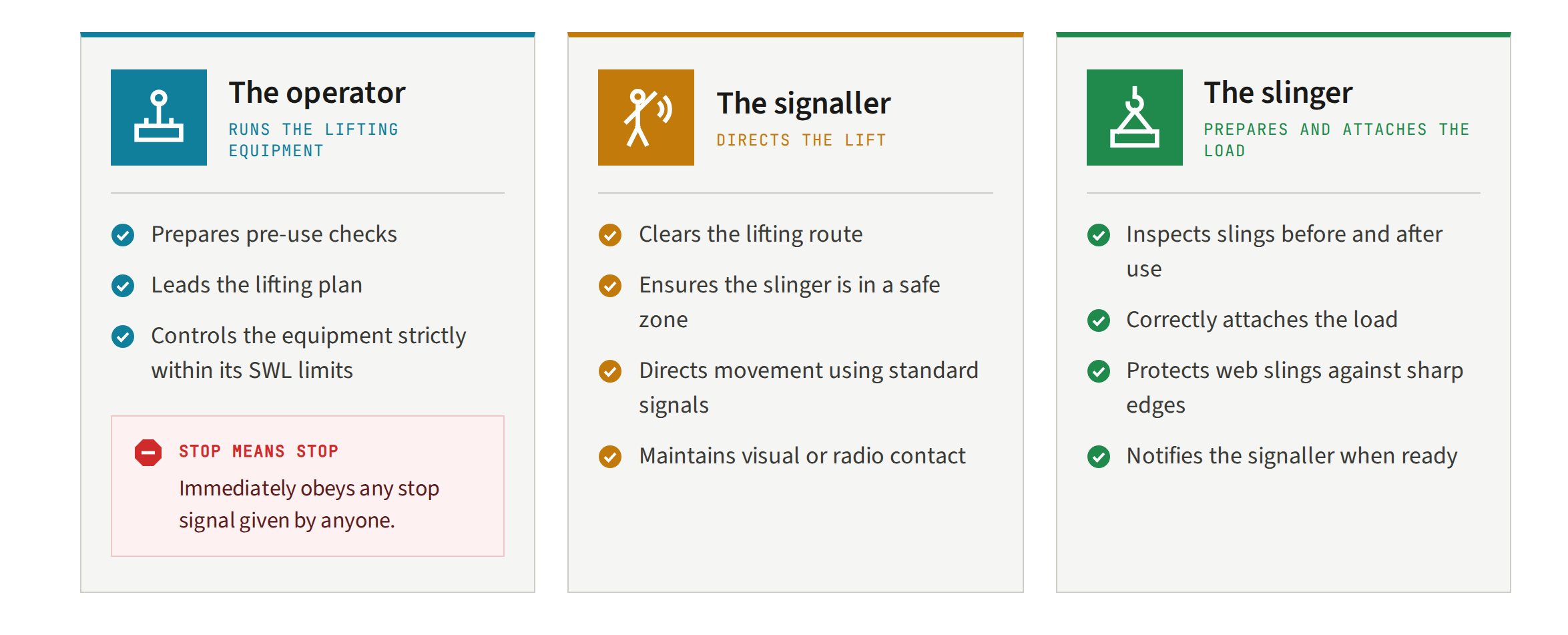
A safe lift requires synchronized teamwork between three designated key roles:
Standardized Hand Signals for Shipboard Operations
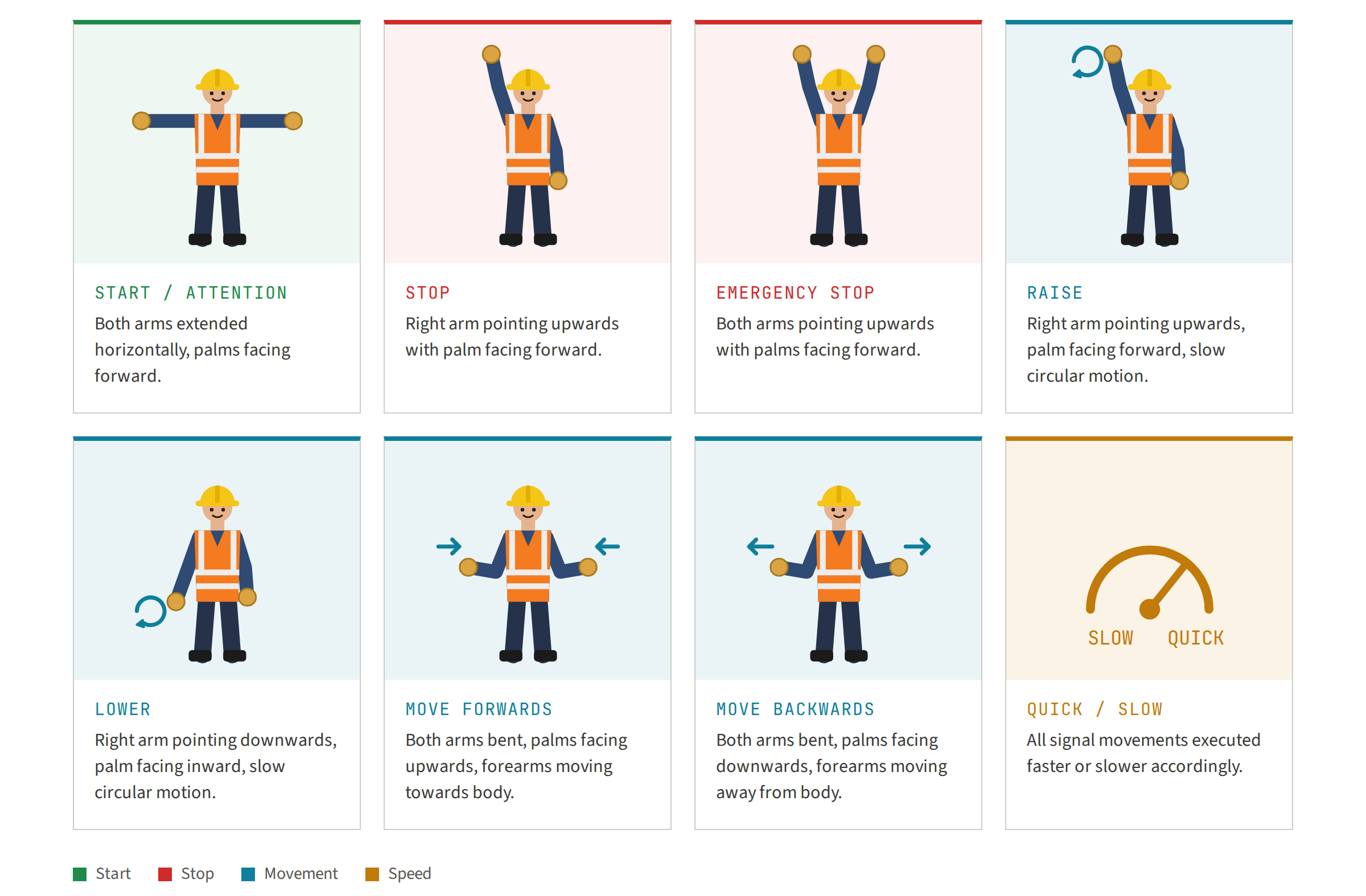
When engine noise, wind, or distance prevents clear verbal communication, standard hand signals are the primary safeguard.