IMO has signed updated data-exchange agreements with the Black Sea and Caribbean Memoranda of Understanding on Port State Control, bringing the number of regional PSC regimes with harmonized data-sharing arrangements to eight. The move is another step toward IMO's PSC Overarching Database (ODB) — a system designed to give inspectors near real-time, harmonized inspection data worldwide, reduce duplicate reporting, and support more effective, risk-based inspection planning.
In Port of Spain, Trinidad and Tobago, policymakers, maritime educators, and industry stakeholders gathered for a regional seminar on preparing seafarers to safely operate ships running on ammonia, methanol, and hydrogen.
The five-day programme — hosted by MTCC Caribbean and funded by IMO in partnership with the World Maritime University — combined technical sessions with hands-on training at an ammonia production facility, building directly on IMO's new interim training guidelines for alternative fuels (STCW.7/Circ.26 and Circ.27).
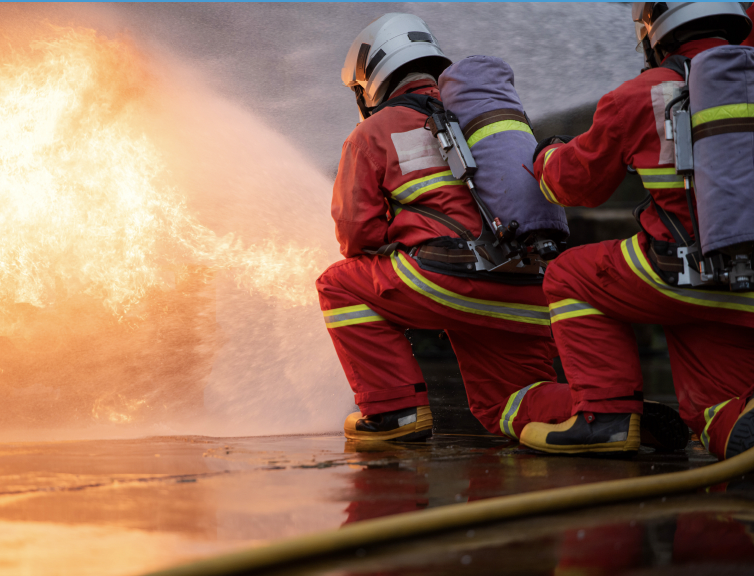
As lithium-ion batteries spread across the marine industry — from hybrid propulsion to transported EVs to consumer devices — a new type of fire loss is emerging. Thermal runaway fires burn hotter, spread faster, and are harder to investigate than conventional fires, often destroying the very evidence needed to determine cause. This issue breaks down what's driving the risk, how investigations need to adapt, and why subrogation strategy has to be considered from day one of a claim.
The Shipowners' P&I Club has published detailed guidance on recognizing and addressing forced labour, debt bondage, and exploitative recruitment in the maritime industry.
We summarize the warning signs — from confiscated identity documents to contract switching — and the practical steps ship owners, operators, and crewing companies can take, from applying the Employer Pays Principle to building safe, accessible reporting channels for crew.
University of Delaware researchers are tagging shortfin makos and blue sharks with sensors that measure ocean temperature, depth, and salinity — data that could improve hurricane intensity forecasts along the U.S. East Coast. It's a genuinely novel approach to a persistent gap in ocean monitoring, and a reminder of how far environmental science has to reach to support maritime safety.
Life at sea doesn't always leave room for recovery. This month's health feature offers seven quick, evidence-informed micro-habits — from resetting posture to naming an emotion out loud — that seafarers can use to interrupt stress in the moment. They're not a substitute for adequate rest or professional support, but they're a practical addition to a broader wellbeing routine.
FuelEU Maritime is now not expected to enter into force in Norway before January 1, 2028, following delays in its incorporation into the EEA Agreement. Until then, Norwegian and Icelandic ports remain treated as third-country ports under the regulation — a detail worth factoring into compliance planning for operators trading in the region.
Our analysis of recent incidents provides critical reminders for every crew member:
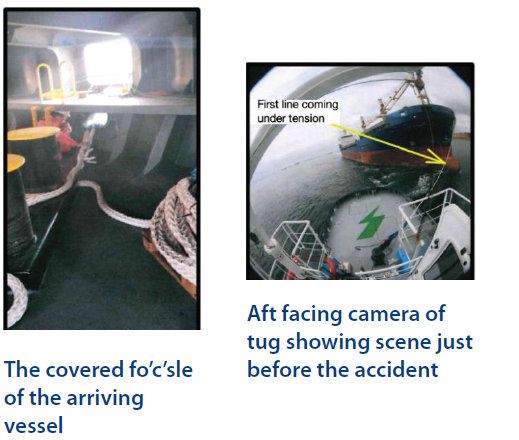
A miscommunication during a routine mooring operation led to a fatal injury when a tensioned line struck a deckhand. The investigation pointed to poor sightlines between vessels and the need for clearer procedures when lines can't be passed simultaneously.
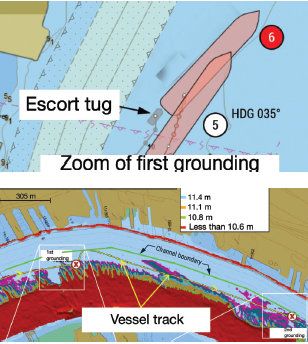
A fully laden bulk carrier grounded twice in a tidal river after a pilot, affected by what investigators called "expectation bias," repeatedly steered outside the dredged channel. The case is a strong reminder of why bridge teams must challenge a pilot's decisions when something doesn't look right.
At Maritime Trainer, we continue to launch targeted training solutions to bridge the skills gap:
-
Safe Use of Lifting Appliances and Equipment: This course provides a comprehensive guide to the legal, technical, and safety requirements for conducting lifting operations at sea. It establishes a safety culture by defining the roles of personnel, outlining strict inspection and maintenance protocols for both lifting appliances (machinery) and loose gear (detachable connectors), and detailing standardized communication through hand signals.
-
-
-