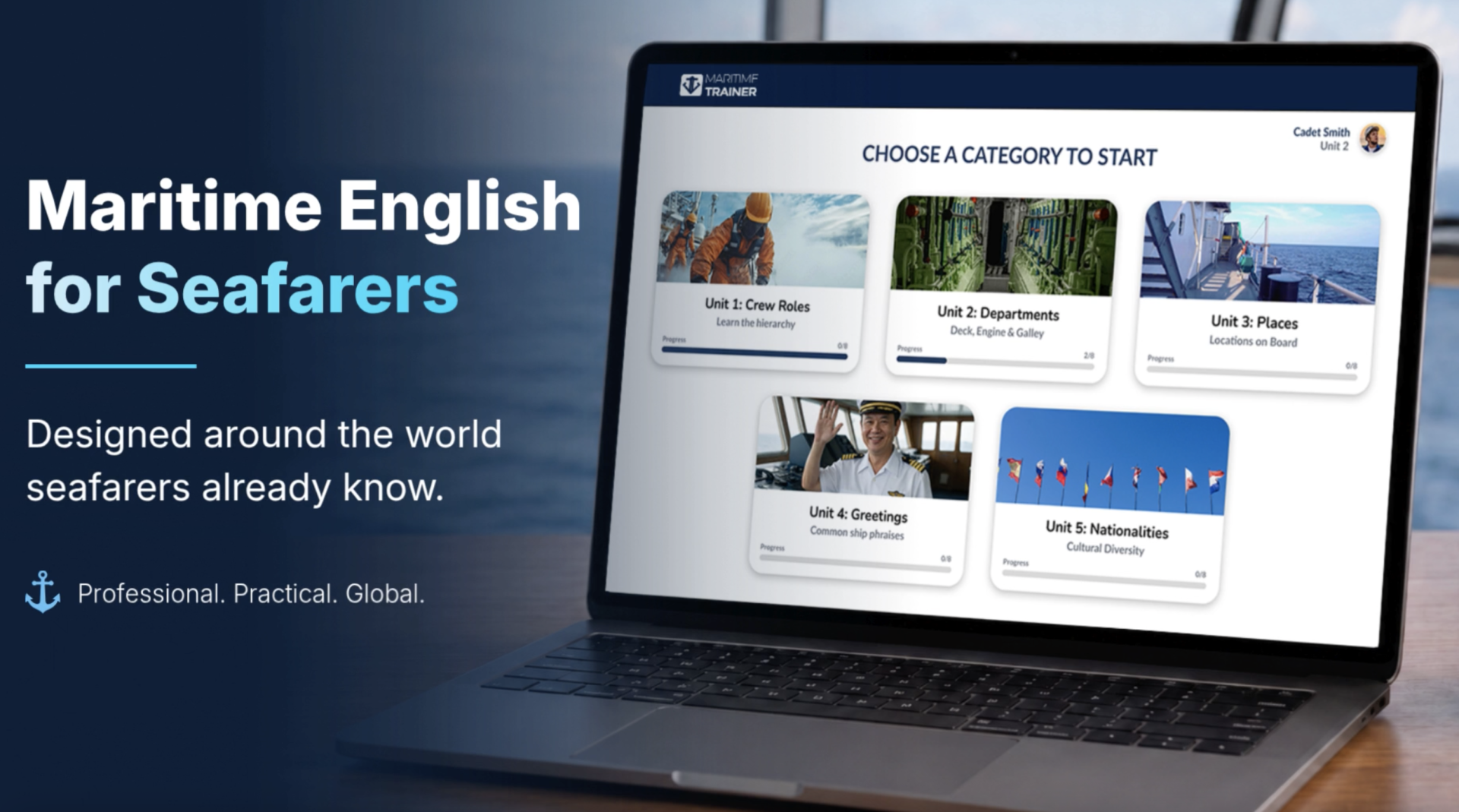
The Communication Gap in Maritime Operations
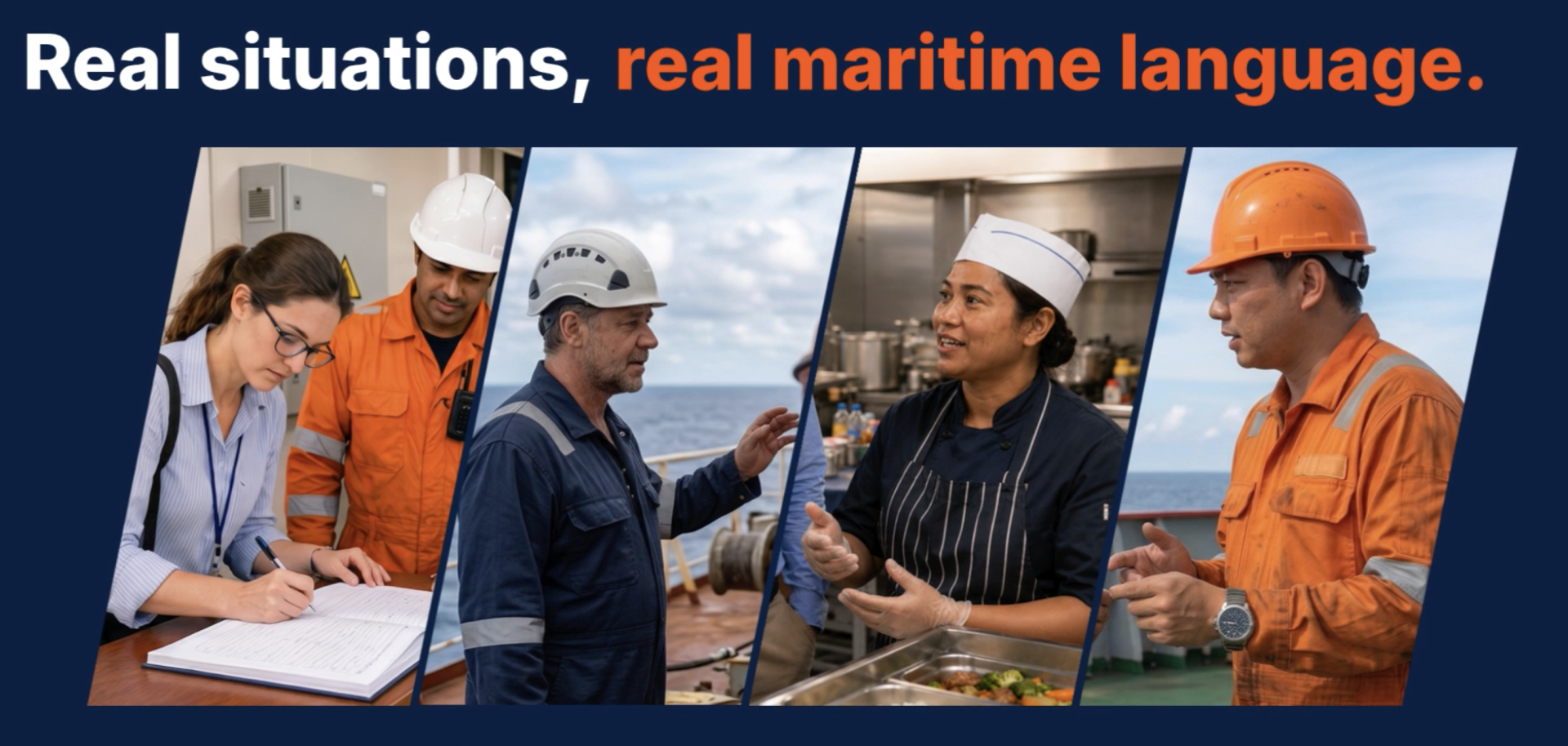
Designed for Seafarers, Built for Operations
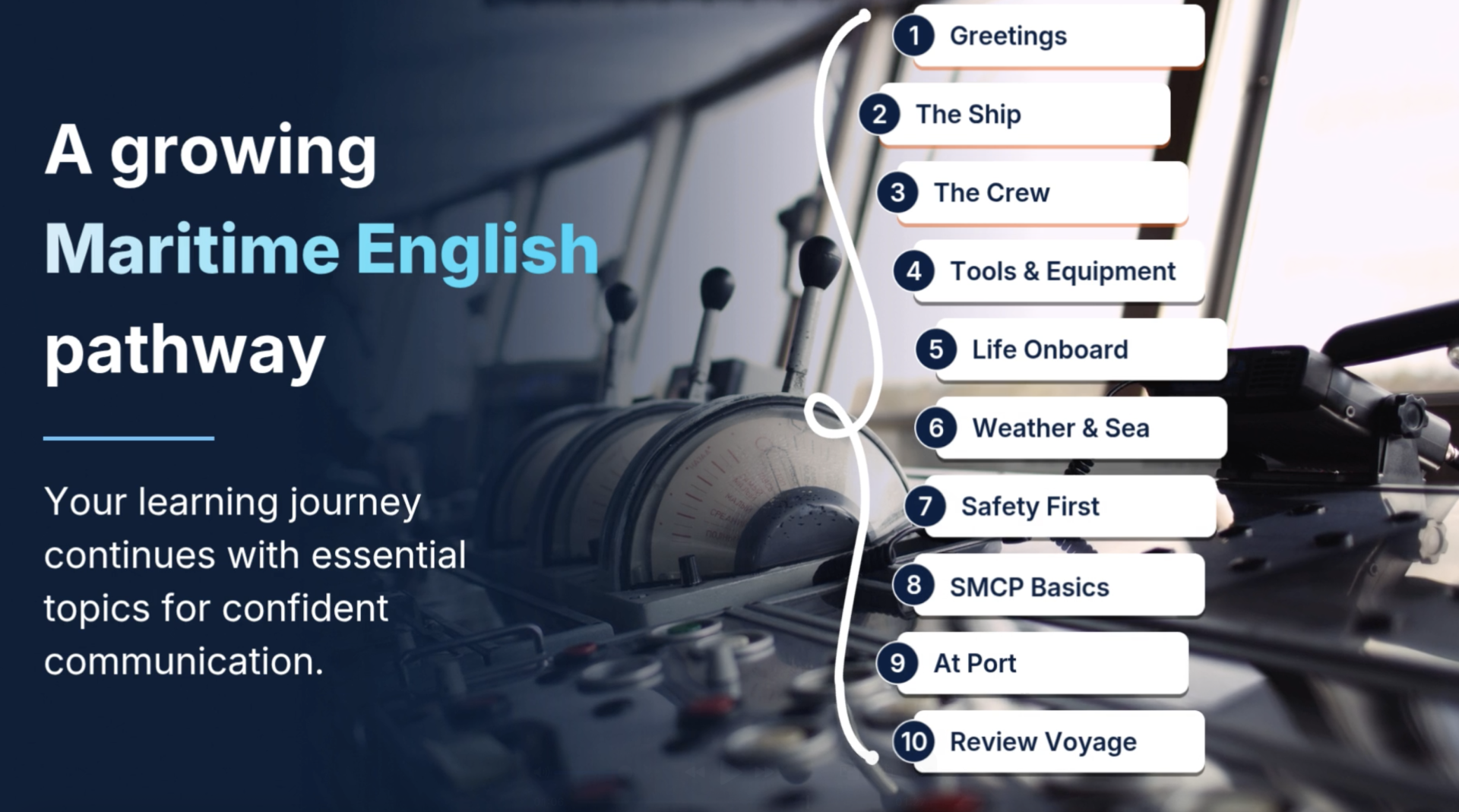
Why Training Managers Choose Maritime Trainer
Frequently asked questions
What is Maritime English and how is it different from General English?
Maritime English is a specialized form of the English language tailored specifically for the global shipping industry. While General English focuses on everyday casual conversations, Maritime English introduces strict nautical terminology (e.g., galley instead of kitchen, starboard instead of right side), standard commands, and structural clarity designed to eliminate ambiguity, ensure safety, and optimize multi-cultural crew operations.
What is the STCW Maritime English requirement?
The STCW Convention (Standards of Training, Certification and Watchkeeping), governed by the International Maritime Organization (IMO), mandates that all seafarers must possess adequate English language proficiency to execute their duties safely. Deck and engine officers must be able to understand technical manuals, issue clear commands, and use standardized language for internal and external watchkeeping communications.
What are IMO SMCP basics and why are they important?
SMCP stands for Standard Marine Communication Phrases. Developed by the IMO, it is a standardized set of key safety and operational phrases used to bypass language barriers at sea. SMCP is critical because it provides a precise, universally understood vocabulary for ship-to-ship, ship-to-shore, and onboard emergency communications, drastically reducing maritime accidents caused by miscommunication.
Do engine and galley ratings also need to learn Maritime English?
Yes. While officers require higher proficiency for watchkeeping and navigation, all crew members—including engine room ratings and galley staff—must understand safety notices, emergency protocols, and basic onboard roles. Effective communication ensures that the entire vessel operates cohesively during daily routines and unexpected emergency drills.
Can I track my crew's Maritime English training progress online?
Absolutely. Maritime Trainer's digital learning platform provides corporate training managers with a comprehensive dashboard. You can effortlessly monitor key performance metrics, check average module progress, track completion times, and verify communication competence across your entire fleet before your crew ever boards a vessel.
Full Visibility for Training Managers