Maritime's New Human Model: Building the Seafarer of the Future
Aug 6
/
Capt. Ozgur Alemdag
The global officer shortage, digitalization, artificial intelligence, and the green transition are rewriting the rules of the maritime industry. According to Maritime Trainer, the winners of the future will be companies that select, develop, and manage the right human resources using data-driven approaches.
Managing the Officer Shortage and Quality Dilemma
Industry reports point to a severe global officer shortage while vessel operations grow increasingly complex. From Maritime Trainer's perspective, how should we manage this officer shortage and the quality vs. quantity dilemma? What is the formula for increasing quantity without compromising quality? What kind of support do you provide in this context?
Today, the maritime industry finds itself right in the middle of one of the largest human resource paradoxes in its history. Global workforce reports by the International Chamber of Shipping (ICS) and BIMCO reveal that the sector currently faces a shortage of thousands of officers, with projections indicating this gap will widen in the coming years. We are confronting a serious crisis in securing qualified personnel, particularly for critical management-level positions such as captains and chief engineers.
So, how did we get to this point? Behind this officer shortage lie powerful sociological, psychological, and geopolitical shifts:
Pandemic Trauma and Loss of Trust:
During COVID-19, hundreds of thousands of seafarers were stranded on ships for months, unable to return to their families and failing to receive the global recognition they deserved as "key workers." This severely shook confidence in the profession. Many experienced officers chose early retirement or transitioned ashore, declaring "never again." Meanwhile, many young people who were considering maritime decided against pursuing a career in the field.
Geopolitical Crises and Conflict:
The Russia-Ukraine war significantly disrupted the supply of personnel from these two countries, which account for roughly 15% of the global seafarer pool. Added to this are drone and missile attacks in the Red Sea, regional tensions centered around Iran, and vessel seizures/security crises in the Strait of Hormuz—turning strategic waterways into powder kegs. Working at sea is no longer just a demanding job; it now carries a high level of vital risk and psychological pressure. As a result, personnel naturally hesitate to serve on these routes.
Declining Desire to Work at Sea:
For the new generation, the romantic allure of the sea has largely faded. Flexible working models ashore, digital entrepreneurship opportunities, and the desire to stay connected to social life have significantly reduced young talent's motivation for a maritime career. As the comfort offered by shore-side life increases, the attractiveness of the seafaring profession declines proportionally.
When all these factors combine, our human resource pool narrows while the expected knowledge, competence, and quality levels from this pool continue to rise. Vessels are now far more digital, regulations are more comprehensive, and inspections are stricter than ever. This leaves shipowners facing a critical choice.
Many shipowners turn to human resources in developing nations. However, this brings operational risks stemming from personnel who lack adequate maritime training, corporate culture, and communication skills. Ultimately, shipowners face a fundamental question:
"Should I hire just anyone to keep the vessel moving, or should I focus on nurturing and retaining my own talent through long-term HR strategies?"
At Maritime Trainer, our answer to this question is crystal clear:
compromising quality for the sake of quantity brings severe risks, including maritime accidents, loss of life, environmental disasters, operational losses, and even the commercial uncharterability of vessels.
Therefore, the path to success today lies in:
compromising quality for the sake of quantity brings severe risks, including maritime accidents, loss of life, environmental disasters, operational losses, and even the commercial uncharterability of vessels.
Therefore, the path to success today lies in:
- Developing long-term human resource strategies,
- Building a strong corporate culture,
- Running effective employer branding and PR campaigns,
- Reaching young talent through cadet programs,
- Establishing accurate selection and evaluation systems,
- Designing effective onboarding processes,
- Offering continuously updated interactive training tailored to the learning habits of the new generation,
- Systematically managing performance and competencies,
- Supporting employee well-being, and
- Investing in long-term career planning.
The duty of crew management departments is no longer just finding and dispatching personnel to a ship when needed. Today, we live in an era where companies taking initiative in the areas listed above survive. We are going through a period where companies managing all HR functions holistically will emerge as the winners of the future.
Thus, rather than trying to close this gap using traditional, outdated methods, companies that optimize their processes with end-to-end digital infrastructure and data analytics create a real difference.
In this context, we enable ship management companies to manage human resources—their most critical success factor—through a single digital platform covering recruitment, onboarding, training/development, and retention.
Simultaneously, through business intelligence solutions, we support data-driven decision-making processes and integrate with various ERP systems, helping companies achieve significant time and labor savings.
Simultaneously, through business intelligence solutions, we support data-driven decision-making processes and integrate with various ERP systems, helping companies achieve significant time and labor savings.
This holistic approach makes it easier for companies to comply with industry standards and achieve better results in audit processes.
Bridging the Generational and Cultural Gap
Maritime is one of the sectors where hierarchy and traditional master-apprentice relationships are strongest. However, today we face Gen Z seafarers who were born into a digital world. How do you observe the friction caused by this cultural shift? How can we align traditional maritime culture with the expectations, attitudes, and behaviors that the new generation needs to develop?
Maritime's long-standing, rigid "I tell you, you do it" mindset no longer resonates as strongly when it meets Gen Z.
New-generation officers do not accept hierarchy unquestioningly; they want to know the reason behind their work, hear logical explanations, receive regular feedback, and work in a fair environment.
New-generation officers do not accept hierarchy unquestioningly; they want to know the reason behind their work, hear logical explanations, receive regular feedback, and work in a fair environment.
However, we must also see the other side of the coin. In this generation, we observe deficits in certain attitudes and behaviors that are crucial by the nature of the seafaring profession: a sense of belonging, corporate loyalty, face-to-face communication skills, and a long-term career perspective top this list.
One of the most critical deficiencies is a sense of purpose and belonging. New-generation employees want to see how their work contributes to the global supply chain and society. However, seafarers often remain in the unseen part of the story. When expectations of quick financial gains outweigh a focus on personal and professional development journeys, they can lose motivation just as fast.

This is precisely where we must go beyond traditional training approaches. This transformation is possible not just through technical knowledge, but through company culture, leadership mindsets, and the right learning models.
To ensure this alignment at Maritime Trainer, we focus on four core areas:
Company-Specific Onboarding Programs and Cultural Transfer:
We believe this transformation must start before the seafarer even steps foot on the vessel. Therefore, through onboarding programs tailored specifically for our shipowner clients, we systematically transfer corporate culture to new-generation seafarers. Before embarking on their first assignment, seafarers get to know the company’s safety culture, vision, values, and working principles. Thus, when they go onboard, they are culturally as well as technically prepared.
Mastery of Company Procedures and Strengthening Belonging:
One of the biggest challenges for the new generation is understanding and adopting complex company Safety Management System (SMS) procedures. We digitize these processes, making them more understandable and interactive. Consequently, seafarers learn procedures more easily and build a stronger bond with the company. This approach not only boosts knowledge levels but also significantly strengthens employee retention.
New-Generation Mentorship and Leadership Approach:
We do not want to eliminate maritime’s deeply rooted master-apprentice culture. On the contrary, our goal is to transform it into a modern mentorship system fit for today’s needs. Hence, we provide new-generation leadership, communication, and mentorship training not only to young officers but also to senior personnel like captains and chief engineers. Our objective is to build psychologically safe working environments based on mutual learning—benefiting from young seafarers' digital skills and inquisitive perspectives while passing down experience—and opening the door for reverse mentorship.
Training Design Aligned with New-Generation Learning Habits:
If you try to force Gen Z to memorize hundreds of pages of procedure manuals, you will lose them at the very start. Today’s young workers learn faster through visual storytelling, focus easier on short content, and gain far more value from interactive experiences. Therefore, we design our training content entirely around their learning habits. Through mobile-compatible micro-learning modules, gamified scenarios, storytelling techniques, and interactive content, we turn learning from a mandatory chore into a natural experience.
Ultimately, retaining the new generation cannot be achieved solely through high-salary policies. You achieve true alignment when you build a holistic training ecosystem that respects employee time, instills a sense of purpose, conveys corporate culture from the recruitment phase, and supports growth with technology. As Maritime Trainer, this holistic transformation model is precisely what we offer to the maritime industry.
Navigating the "Twin Transition" and Regulatory Delays
The maritime industry is simultaneously under pressure from both digitalization and decarbonization (the green transition). Alternative fuels (ammonia, methanol, hydrogen) and autonomous/smart ship systems are now at our doorstep. How should training strategies evolve to bridge the massive skill gap created by this "Twin Transition"?
Especially given the slow pace of IMO STCW revision processes, what role falls upon agile training institutions like Maritime Trainer to prevent the gap between industry expectations and regulations from widening?
Today, as an industry, we face what is perhaps the greatest skill gap risk in maritime history.
Digitalization on one side, decarbonization on the other... These two major transitions progressing in tandem make alternative fuel technologies, energy efficiency systems, cybersecurity, data analytics, and digital operations management indispensable parts of maritime.
The level of technical knowledge and competence expected from today’s seafarer has grown exponentially compared to five years ago. Ships are no longer just cargo-carrying vessels; they have transformed into high-tech, data-generating smart operation centers.
Therefore, the approach to training must undergo a radical shift:
- The goal is no longer merely training new recruits; it must be continuously preparing existing human resources for the future through reskilling and upskilling programs.
- The "hire personnel, give them basic training, and let them sail safely" mindset is no longer sustainable.
- Today's shipowners must transform into learning organizations to maintain their competitive edge.
Yet, right at this juncture, we encounter a significant challenge: The revision process for the IMO STCW Convention, which forms the bedrock of global maritime training, naturally moves very slowly because it requires consensus among many nations.
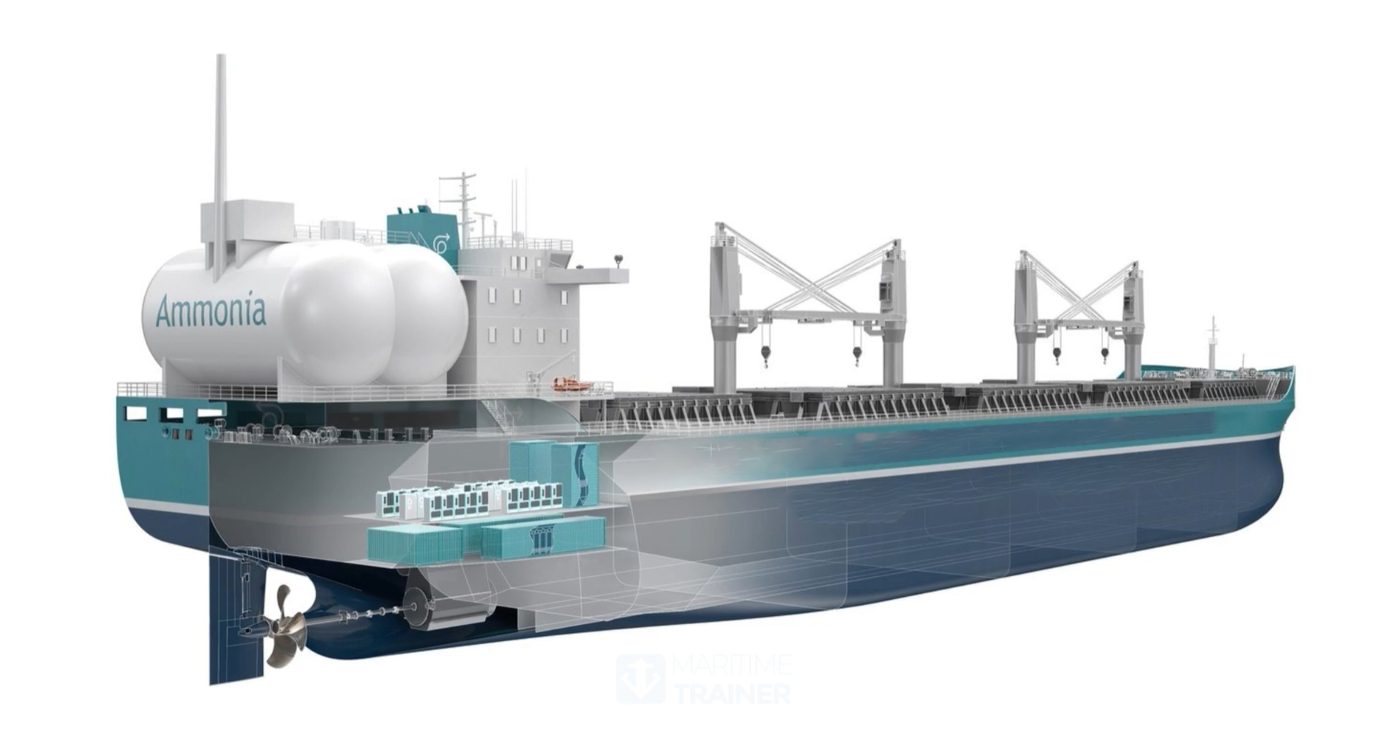
However, the industry, technology, and the climate crisis do not have the luxury to wait. A shipowner adding a methanol- or ammonia-fueled vessel to their fleet tomorrow cannot wait years for the STCW to be updated. Consequently, the gap between regulatory requirements and operational realities widens day by day.
This is precisely where the crucial role of agile, technology-driven training institutions like Maritime Trainer comes into play. We do not lag behind regulations; we analyze the current and future needs of the industry and develop our training solutions accordingly.In line with this, we adopt a multi-layered, global approach when creating our training library:
Collaboration with Makers and New Technologies:
In line with the needs of the shipowners and managers we partner with, we collaborate directly with the world’s leading equipment manufacturers. We co-develop training modules covering new-generation digital systems and alternative fuel technologies with these manufacturers, bridging theoretical knowledge with real operational applications. As a result, our training programs address actual field needs, not just regulatory compliance.
Integrating Industry Standards and Audit Compliance:
We do not base our training content solely on IMO regulations. We also factor in the expectations of oil majors, charterers, and international inspection mechanisms. We integrate TMSA (Tanker Management and Self Assessment), OCIMF’s human-element-focused SIRE 2.0 inspection framework, and RightShip requirements—a primary benchmark in dry bulk—as fundamental components of our training library. This enhances not only our partners' training standards but also their audit performance.
Future Seaskills Vision:
We invest not only in today's needs but also in future competencies. In this context, we closely follow the Future Seaskills approach developed by Singapore’s Tripartite committee—one of the world's most visionary maritime hubs. We continuously update and diversify our digital training library in line with these global insights, incorporating new skill areas into the system.
Our strategy is clear: We accept IMO and STCW standards as our baseline reference. On top of that, we build the latest global maritime practices, emerging technologies, and operational expectations. Our mission is to build a reliable bridge between the natural slowness of regulations and the rapid transformation of the industry, developing solutions that bridge tomorrow's skill gap today.
Leveraging VR, AI, and Data Analytics
We are in an era where traditional classroom training and classic Computer-Based Training (CBT) modules are no longer sufficient. How does Maritime Trainer position technologies like VR (Virtual Reality), artificial intelligence, and data analytics to solve global maritime crises and the growing skill gap?
To start with a clear observation: The era of passive CBT modules—where users simply click "Next" on a screen—and multi-day traditional classroom sessions is officially over. Attempting to support new-generation ship technologies and Gen Z's learning habits with legacy training methods does not align with today’s maritime realities.

We position ourselves not merely as a content producer, but as a global Maritime EdTech (Maritime Educational Technology) company shaping the industry. We build the training ecosystem of the future upon complementary technological and strategic pillars:
1. Next-Generation 2D and 3D Training Designs
We aim to deliver training in a blended format using the best visualization methods available. What truly makes a difference is the pedagogical design of the digital content in our daily training library.
We have completely abandoned the traditional "read, memorize, pass" mindset. In our courses, we use storytelling to make the seafarer an active participant in the scenario. Gamification techniques boost learning motivation, while case studies built on real maritime accidents and highly interactive content turn learning from a passive chore into an active experience. Furthermore, by developing 3D training scenarios recreating real-world incidents, we enable seafarers to gain experience before encountering actual operations.
2. Zero Risk, Maximum Muscle Memory with VR
One of the greatest risks in maritime is personnel encountering critical or dangerous operations for the first time on a real vessel. A tragic example of this remains Enclosed Space Entry, which unfortunately still accounts for the highest number of fatalities.
These operations cannot be learned merely by reading books or watching videos because developing proper reflexes in real life requires far more than theoretical knowledge. With our VR applications, we transport the seafarer into a virtual ballast tank while they are still ashore. From correct gas detector usage to ventilation checks, Permit to Work protocols, and emergency rescue scenarios, participants experience all critical steps in a highly realistic yet completely safe virtual environment.
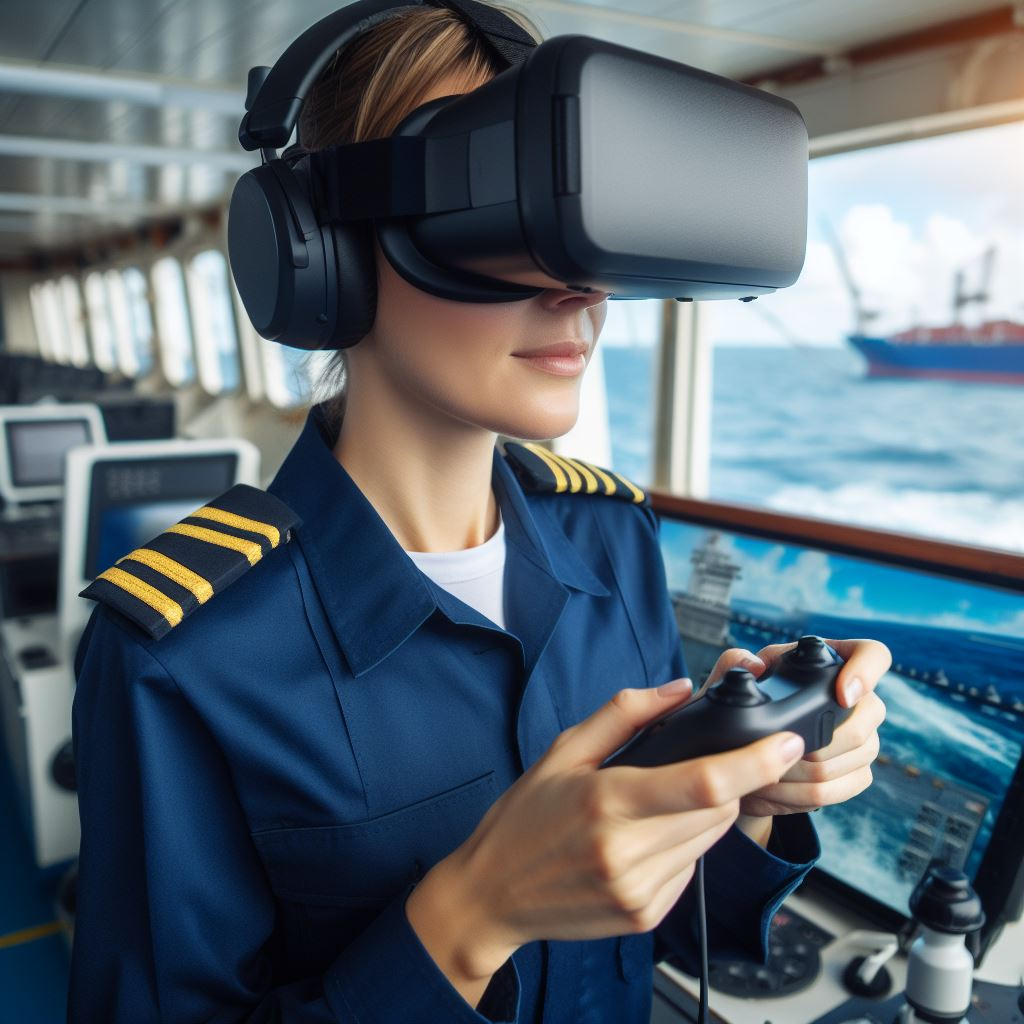
If they make a wrong decision, they see the consequences within the simulation, developing the necessary reflexes to avoid the same mistake during real operations. Consequently, when they step onboard, they carry not just knowledge, but internalized behavior patterns and strong muscle memory. We apply the same approach to other critical shipboard operations, continuously expanding our training ecosystem by backing VR solutions with computer-based training.
3. AI-Powered Knowledge Assistant: MTAI
Viewing the new approach to maritime training merely as "more modern courses" is insufficient. The real change lies in training evolving from a standalone activity into a holistic competency ecosystem.
This ecosystem consists of five core steps:
One of our most significant tech investments is our AI-driven knowledge engine, MTAI. Maritime possesses a vast knowledge infrastructure comprising SOLAS, MARPOL, international regulations, and hundreds of pages of company procedures. Searching through these documents during a critical operation leads to both time loss and operational risk.
MTAI eliminates this problem. Capable of scanning all company SMS documentation and international regulations in seconds, this smart assistant allows seafarers to ask questions in natural language.
For example, when asking:
For example, when asking:
"What is the emergency relief valve check procedure during methanol operations?"
or
"What is the minimum required oxygen level for enclosed space entry?"
the system provides the relevant procedure, reference clauses, and actionable steps in seconds, rather than forcing the user to read through thousands of pages. This speeds up access to information, enhances operational safety, and greatly simplifies decision-making.
4. Dynamic Competency Management
One of our newest solutions under development is the Dynamic Competency Management module. This system does not merely track completed courses; it digitally manages the technical and behavioral competencies a seafarer must possess based on vessel type, rank, and company expectations.
The platform centralizes training results, performance evaluations, and manager feedback in a single data pool. Shipowners can thus view every seafarer's actual skill levels and manage all HR processes—from promotion planning to skill gap identification—in a data-driven manner.
5. Predictive Analytics and the Power of Data
Data analytics is one of our key focus areas. Through our MTData business intelligence module, companies can filter evaluation, training, competency, and well-being data to generate statistics, benchmarks, and trendlines.
Furthermore, as MTAI adoption grows, we will gain the ability to analyze where seafarers query the most, identifying knowledge gaps and competency deficiencies. Looking ahead, we will even be able to query these insights via a chatbot—for instance, asking AI to identify the top candidate among three promotion applicants based on data.
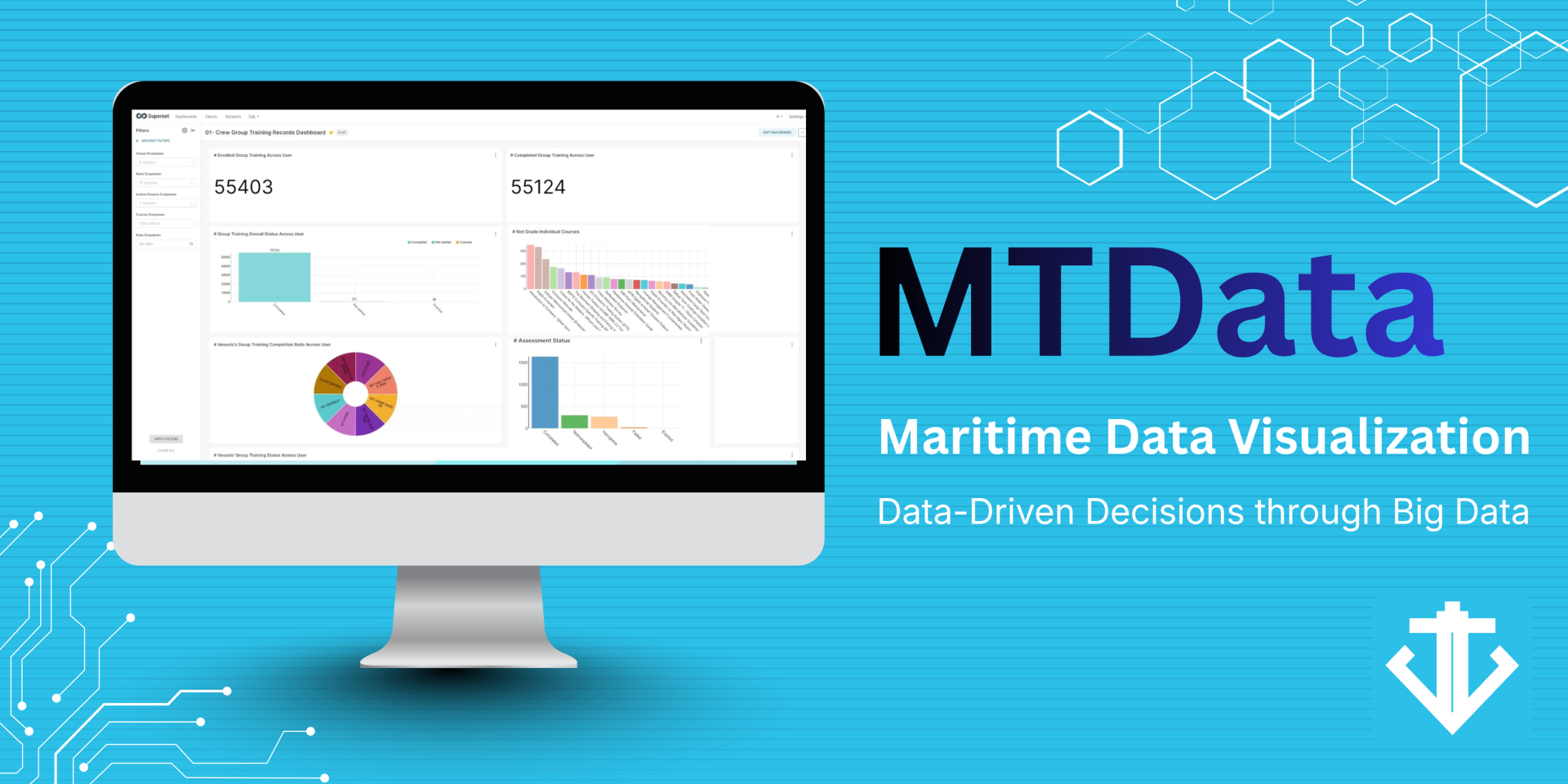
Using this data, we don't just supply reports; we develop strategic recommendations to proactively mitigate risks. Resolving today's geopolitical risks, human resource shortages, and future skill gaps with legacy methods is no longer viable. The future of maritime safety hinges on converging effective data utilization, AI knowledge systems, dynamic competency management, and advanced EdTech on a single platform. At Maritime Trainer, our goal is not just meeting today's training demands, but building the future of maritime human resources today.
The All-in-One Maritime HR & EdTech Ecosystem
Everything you've described points to a comprehensive technological infrastructure—ranging from training content and simulations to AI solutions and competency management. Defining Maritime Trainer today merely as a "training company" falls short. How do you define this end-to-end digital HR and training ecosystem you have built? What exactly does this platform promise to shipowners?
That is a very accurate observation.
Since day one, Maritime Trainer has been a continuously evolving entity. Today, we position ourselves not just as a company producing training content, but as a global Maritime HR & EdTech Ecosystem preparing the sector for the future.
We are no longer just a provider offering computer-based training and assessment. From the moment a seafarer first applies to a company, we offer an integrated ecosystem managing their entire lifecycle—recruitment, assessment, onboarding, training, performance management, career planning, promotions, and employee well-being—on a single digital platform. This turns human resource management from intuition-based choices into data-driven decision-making mechanisms.
We built our platform on six key pillars:
Recruitment & Digital Assessment:
The first step in safe operations is selecting the right talent. Our digital assessment modules allow shipowners to objectively and securely measure candidate officers' technical knowledge, English proficiency, and psychometric profiles before they ever step onboard. Thanks to our anti-cheating assessment infrastructure, HR managers receive a detailed digital competency profile highlighting strengths and areas for growth, rather than a simple resume. Recruitment decisions are thus far healthier and data-driven.
Onboarding & Cultural Transfer:
Once recruited, seafarers complete company-specific onboarding programs via our platform before departing for the vessel. During this phase, they learn company procedures, Safety Management Systems (SMS), corporate culture, and operational expectations through interactive content. When they board for the first time, they step into a familiar organization whose culture they already know, rather than a foreign work environment. This significantly shortens adaptation time and reduces operational error risks.
Continuous Development & Personalized Learning:
Maritime is no longer a career completed upon earning a diploma; it is a dynamic field demanding continuous learning. Whether onboard or ashore, seafarers can seamlessly pursue professional growth through our rich 2D, 3D, and VR training library. Whenever they need information, our MTAI assistant steps in to deliver answers in seconds, turning training from a periodic mandatory task into a natural part of daily work.
Seafarer Well-being & Mental Health Management (MTCare):
Evaluating human resources solely on technical competence is no longer enough. Psychological pressure from geopolitical risks, long contracts, and harsh working conditions directly impacts operational safety. Through our MTCare module, we digitally track seafarer well-being. Using surveys, psychometric evaluations, and feedback loops, stress levels, burnout trends, and mental health support needs are regularly analyzed. Our goal is proactive intervention before problems arise, enabling HR teams to take timely action—because sustainable, safe operations are impossible with seafarers who are not mentally well.
Dynamic Competency Management:
A strategic core component is our Dynamic Competency Management module, bringing together training records, performance evaluations, and manager feedback into a unified digital data pool. HR and operations managers can track the real skill map of hundreds of fleet personnel from a single screen—identifying strengths, development areas, promotion readiness, and vessel-specific competency gaps with measurable data.
Data-Driven Promotion & Career Management:
Promotions are among the most critical HR decisions in maritime. Relying on personal opinions can negatively affect morale and safety. Our platform renders this process fully data-driven by evaluating training history, competency scores, performance analysis, and developmental growth together. Promotions thus rely on objective criteria, building employee trust and ensuring companies place the right person in the right role at the right time.
Conclusion
The greatest value we offer shipowners is the ability to manage human resources under a unified digital ecosystem. HR, training, and operations teams no longer need to work across disconnected systems.
With Maritime Trainer, companies digitize HR, foresee operational risks, measure training efficiency, and base decisions on reliable data. Ultimately, they gain not only time and cost savings but also a distinct competitive edge in safety, sustainability, and operational excellence.
We believe that at the core of safe and sustainable operations at sea lie both technology and people. As Maritime Trainer, our ecosystem aims to shape the future of the maritime industry by uniting human capital and data on a single platform.
Capt. Özgür ALEMDAĞ
Founder & CEO
Vetting Assurance Aligned With
SIRE 2.0 Expectations
Under the mature SIRE 2.0 vetting regime, long-term commercial success belongs to ship operators who turn their visible human element gaps into proactive, non-assertive, and automated assets of continuous growth.
BOCAV stands as your most powerful technical partner to mature your company safety culture while minimizing operational risk across your fleet. To proactively map your fleet's operational competencies, leverage the true power of assessor-driven mentoring, and secure total operational transparency, contact our maritime specialists today.
BOCAV stands as your most powerful technical partner to mature your company safety culture while minimizing operational risk across your fleet. To proactively map your fleet's operational competencies, leverage the true power of assessor-driven mentoring, and secure total operational transparency, contact our maritime specialists today.
— assess
Identify the "Why" Behind Human Performance
With 37% of negative observations driven by human factors, standard quizzes are no longer enough. We utilize Psychometric, Aptitude, Competency, and Maritime English testing, powered by vision analytics for proctoring and voice recognition for pronunciation evaluation. Analytics and competency mapping are also provided to pinpoint behavioral risks before they reach the deck.
— TRAIN
Beyond Paperwork: Immersive Readiness
We use storytelling, case studies, interactivity, 2D/3D visuals, real life accidents to change the behaviour of crew members by giving them the necessary skill sets and attitude through innovative learning tools. Our Digital Twin technology and VR-based serious games also give an immersive opportunity by providing a risk-free environment where crew can master safety-critical tasks through experience, addressing the 12.1% gap in "opportunity to learn.
— RETAIN
Sustaining Excellence Through
Maritime Trainer
Procedures fail when "custom and practice" take over, leading to 32.9% of errors. We bridge this gap by combining BOCAV with MTCare and Mentoring to ensure safety-critical habits are verified, nurtured, and ingrained for the long term, supported by necessary behaviours and skills. We support you to spot the gaps and act proactively with the help of our BI tool (MTData) that provides you insights, and enable you to make data-driven decisions.
Empty space, drag to resize
Join Our Newsletter
Subscribe to get our monthly health and safety bulletin free.

Innovative digital learning technology and services provider
Partnership
Become A Partner
Approved & Certified by Bureau Veritas
Flag
approved
We are proud to be member of



Write your awesome label here.