Oct 7 / Maritime Trainer

October 2026 Maritime Review: Nuclear at Sea, Autonomy and Lessons from the Bridge

October's bulletin covers a lot of ground. On the regulatory side, IMO has stepped into the conversation on nuclear technology at sea, and the EU's updated marine equipment rules are now in force. On the environmental side, there's fresh evidence on renewable methanol and a project that will finally put measured emissions next to estimated ones.

Then there's the part we always read twice: the incidents. A collision in fog, and a berth contact caused by two swapped tug names. Neither involved exotic technology. Both came down to awareness, communication and the assumptions people make under pressure. We also mark World Suicide Prevention Day with a piece on why silence is still one of the biggest risks onboard.


Here's a closer look at each story. The full bulletin, with every article in detail, is free to download at the end of this post.

IMO joins the ATLAS launch for safe nuclear technologies at sea

IMO took part in the IAEA's high-level forum in Washington, D.C. that launched ATLAS (Atomic Technologies Licensed for Applications at Sea). The initiative gives governments, regulators and industry a shared platform to work through the legal, safety, security and liability questions that nuclear-powered ships would raise, with IMO covering ship safety and the IAEA leading on nuclear safeguards.

New EU marine equipment rules took effect on 31 August


The 10th Implementing Regulation (EU) 2026/1434 under the Marine Equipment Directive is now in force. It adds no new equipment categories but updates type-approval and testing standards for items from rescue boats and flame arresters to gyro compasses, EPIRBs and GMDSS radio equipment. Declarations of Conformity for products made after 31 August must follow the new rules.


Bangladesh Advances Plans for Hazardous Waste Management

Government ministers have backed plans for Bangladesh's first Treatment, Storage and Disposal Facility in the Mirsarai Economic Zone, following a feasibility study led by IMO's SENSREC Project. Without it, the country's ship recycling industry can't fully meet its obligations under the Hong Kong and Basel Conventions. The next step is turning the study into funding and construction.

Study Tests Regulatory Applicability of Continuous Emissions Measurement


Lloyd's Register, Seapeak, Kongsberg Maritime and Tunable will test a Continuous Emissions Monitoring System on a new LNG carrier due in early 2027. They will compare the CO2 measured onboard against engine test bed data and default emission factors, then assess whether direct measurement could work within IMO and EU reporting frameworks.

Operating Without People at Sea Doesn't Mean Operating Without People


Uncrewed doesn't mean unattended. Drawing on Ocean Infinity's experience, this article explains how control moves from the bridge to Remote Operations Centres, where small teams oversee several vessels at once. Some risks fall away, but resilience, communications and data-driven decision-making become more important than ever. Sea experience still counts; it's simply applied from shore.

New Study Demonstrates the GHG Reduction Potential of Renewable Methanol

SGMF's new life cycle assessment, carried out by WSP and peer-reviewed by experts, compares 15 methanol production pathways. It finds that methanol made with renewable energy can deliver substantial greenhouse gas reductions. Alongside SGMF's earlier LNG and ammonia studies, it gives the industry a like-for-like basis for comparing alternative fuels.

World Suicide Prevention Day: Breaking the Silence at Sea


Long separations, irregular hours and limited support make mental health a safety issue at sea. ILO, Gard and Britannia P&I data show the problem is real and likely underreported. Asking a crewmate directly how they're doing doesn't cause harm; it can open the door to help. Seafarers and their families can reach ISWAN's SeafarerHelp for free, confidential support, 24/7.

Safety Lessons Learned:

Our analysis of recent incidents provides critical reminders for every crew member:

Collision in Fog in a TSS

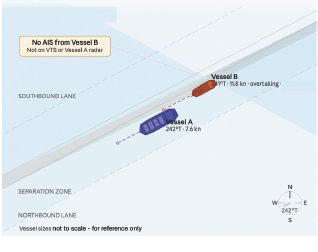
A bulk carrier with a reinforced bridge team was overtaken in fog by a ship doing 11.8 knots in about 350 m visibility, with no AIS and only an intermittent radar return. Neither ship sounded fog signals, and when the bulk carrier altered course to cross the lane, a collision followed. The lessons: AIS isn't foolproof, every contact must be tracked on radar, and speed must match visibility.

Tug Name Mix-up

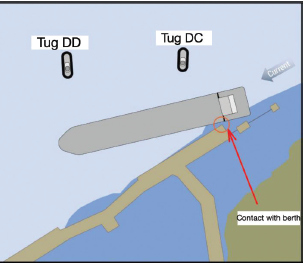
During a night departure, a pilot's radio card had the names of the forward and aft tugs swapped. Orders meant for one tug went to the other, the stern swung into the pier, and both the hull and the berth were damaged. The case shows why tugs should be called by position or number, and why the whole bridge team needs the same mental model of the manoeuvre.

Expand Your Knowledge with New Maritime Trainer Courses

At Maritime Trainer, we continue to launch targeted training solutions to bridge the skills gap:
  • Introduction to CCTV on Ships: A practical overview of marine CCTV systems, covering components, camera placement, maintenance, class standards and the ISPS Code, plus their role in emergency response and incident investigation.
  • ECDIS Transas Navi-Sailor 4000 Training: Hands-on competence on the Navi-Sailor 4000, from chart management and route planning to sensor integration and safety settings, with inspection readiness in mind.