
Preparation: Building a Security Culture
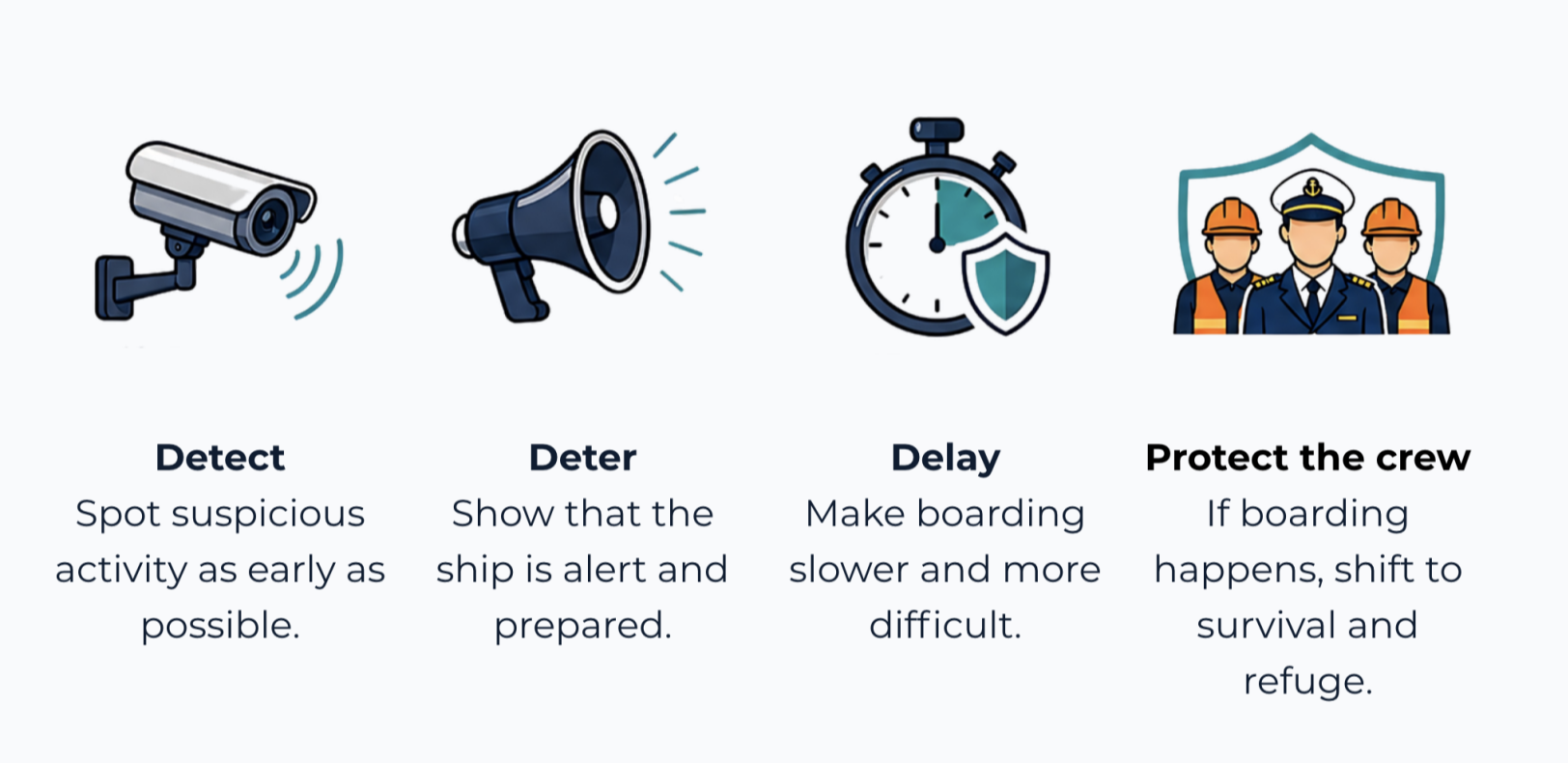
The Four Layers of Defense
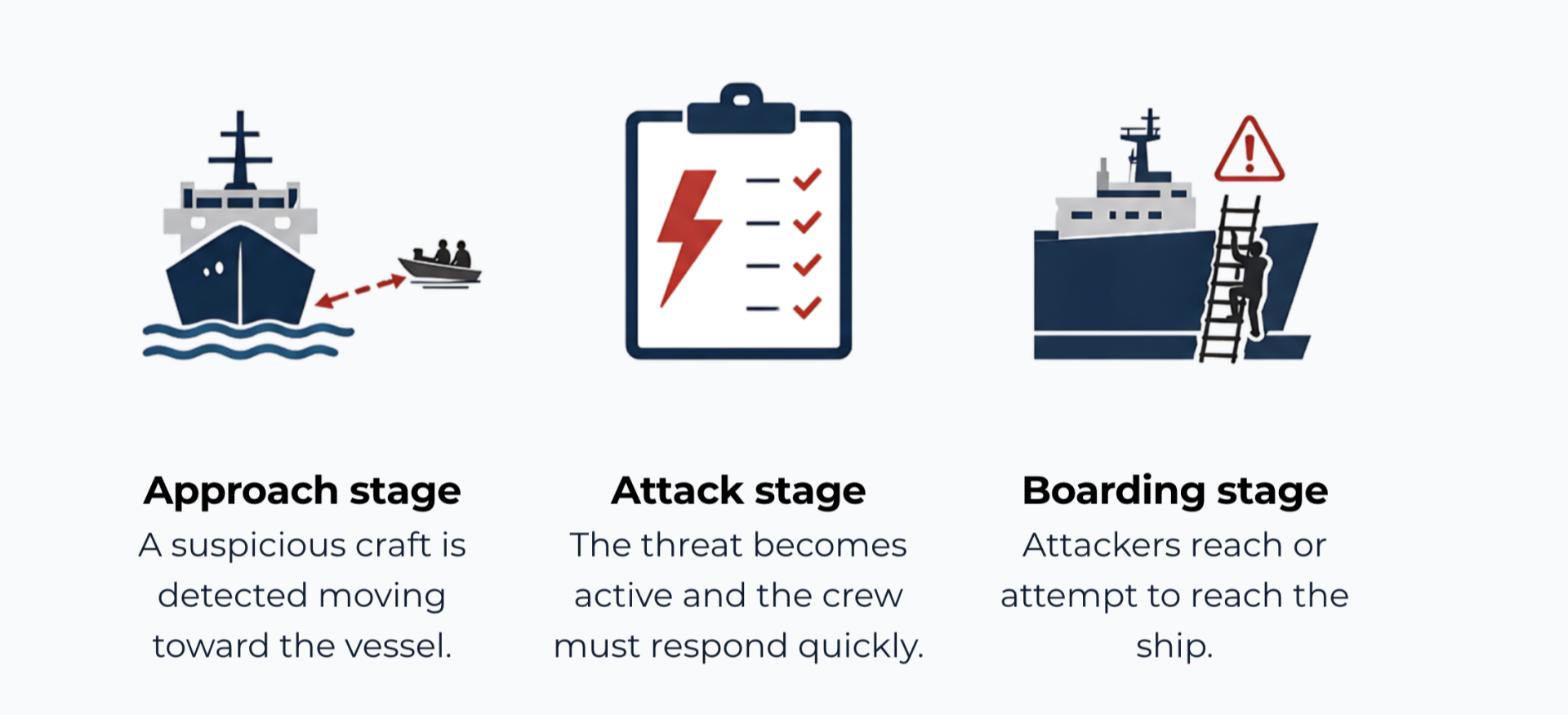
The Anatomy of an Attack: Why Timing is Everything
Insights from Case Studies
When Priorities Shift: Prevention to Survival
Prepared crews respond earlier, communicate better, and protect each other more effectively.
Readiness is built before the emergency begins.
Frequently asked questions
What is the most common failure point during a piracy incident?
The most common failure is a breakdown in the initial response—specifically, delayed recognition or hesitation in escalating the alarm. A timely, coordinated alarm ensures that the entire vessel moves into a defensive or survival posture immediately.
Do hardening measures guarantee protection?
Hardening measures do not guarantee a 100% success rate, but they significantly increase the effort required by attackers. Pirates operate on time constraints; by delaying their progress, you force them to reassess their target.
Why is post-incident reporting considered essential?
Reporting is a vital component of maritime security. Accurate post-incident data helps identify trends, supports investigations, and directly contributes to the safety of other vessels transiting the same region.
Enhance Your Readiness: Piracy & Armed Robbery at Sea
The difference between a vulnerable ship and a secure one is professional training. Our REMO023: Piracy & Armed Robbery at Sea course provides the scenario-based expertise required to manage these threats effectively.