Safeguarding Against Fraud in Maritime Operations: Red Flags & Prevention Strategies

Sep 22


In the vast horizons of global trade, physical maritime hazards like rough seas are not the only dangers lying in wait. A quiet, highly sophisticated threat is constantly lurking across global shipping networks: Maritime Fraud.

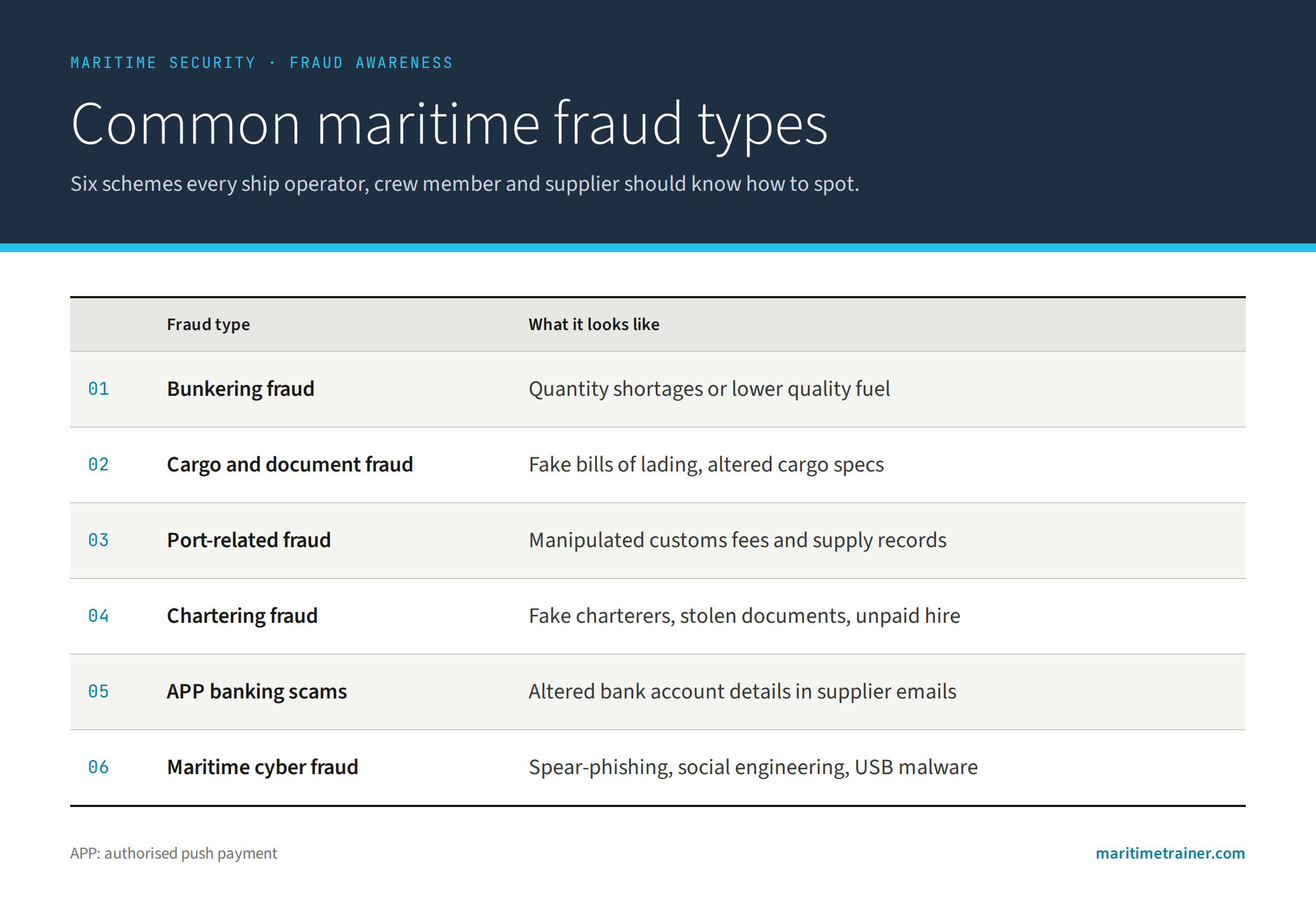
 From fake bunkering delivery records to $1.5 million wire transfer scams hidden inside routine supplier emails, fraud poses severe financial, legal, and operational risks to shipowners, operators, and crew members worldwide. This guide breaks down common fraud schemes in the maritime industry, how to identify subtle red flags, and what steps companies must take to build robust defenses.

Why Maritime Operations Are Primary Targets for Fraud
Maritime operations involve multiple international parties, complex supply chains, large payment amounts, and cross-border communications. These operational layers naturally create communication gaps—and fraudsters actively search for these gaps.

To understand why individuals commit fraud, criminologists point to The Fraud Triangle Theory:   


  1. Pressure: Financial or personal needs driving the individual.
  2. Opportunity: Weak internal controls, lack of verification, or poor segregation of duties.
  3. Rationalization: A mindset that justifies the dishonest act.


By strengthening operational controls and verifying unusual requests, companies remove the Opportunity leg of the triangle.

Common Fraud Schemes in Shipping

Fraud in maritime operations takes many forms, blending traditional document tampering with modern digital manipulation.

Authorised Push Payment (APP) Fraud

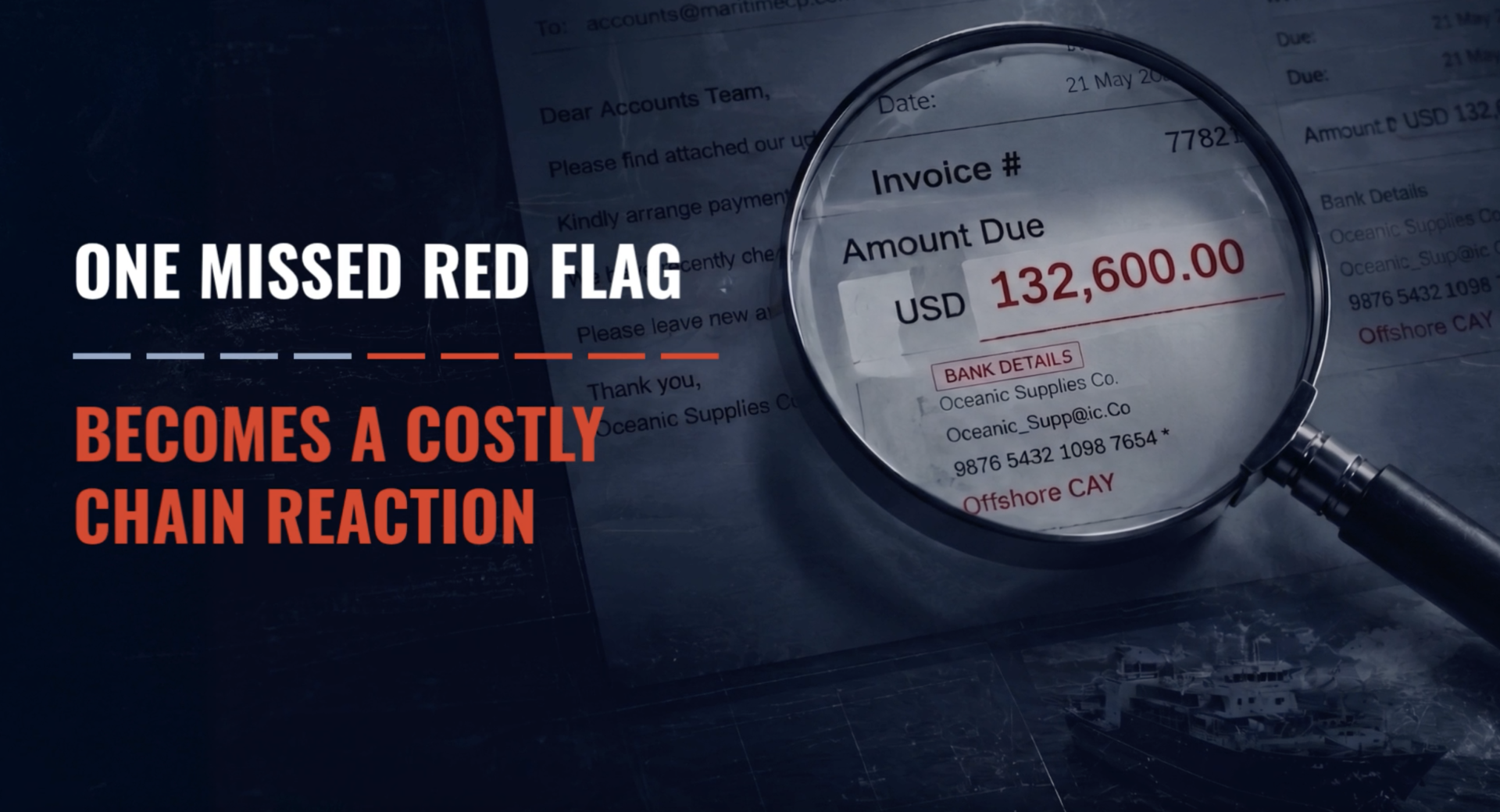
One of the fastest-growing financial threats in shipping is APP Fraud. Fraudsters impersonate a legitimate supplier via email, notifying the company of an "updated bank account detail". If the change is approved without secondary verification through a separate trusted channel, funds are transferred directly to criminal accounts.

Visual Summary: Key Red Flags in Daily Operations
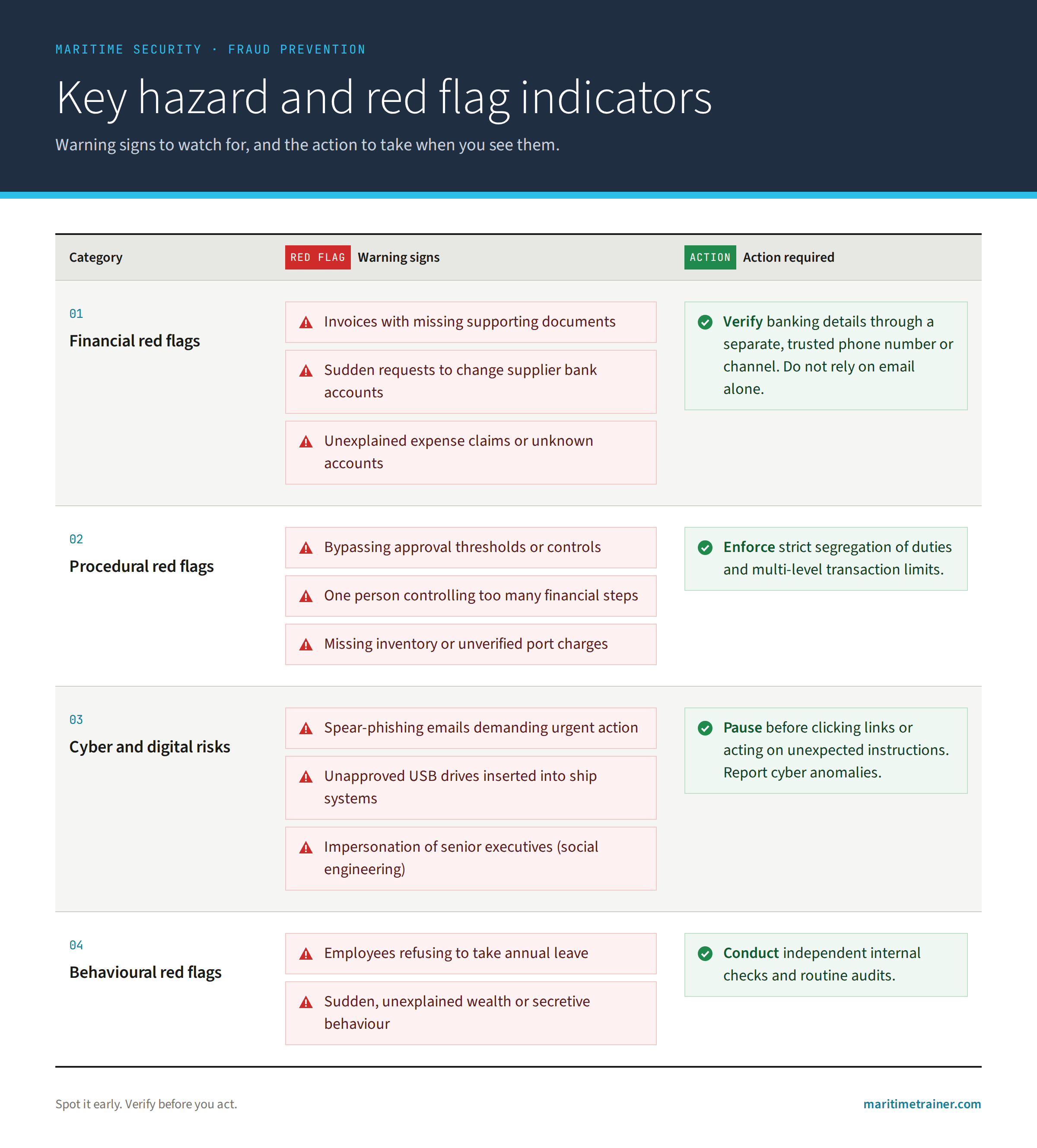
Below is a breakdown of early warning indicators across financial, behavioral, and procedural areas:

How to Respond When Fraud Is Suspected: The 5-Step Response Plan
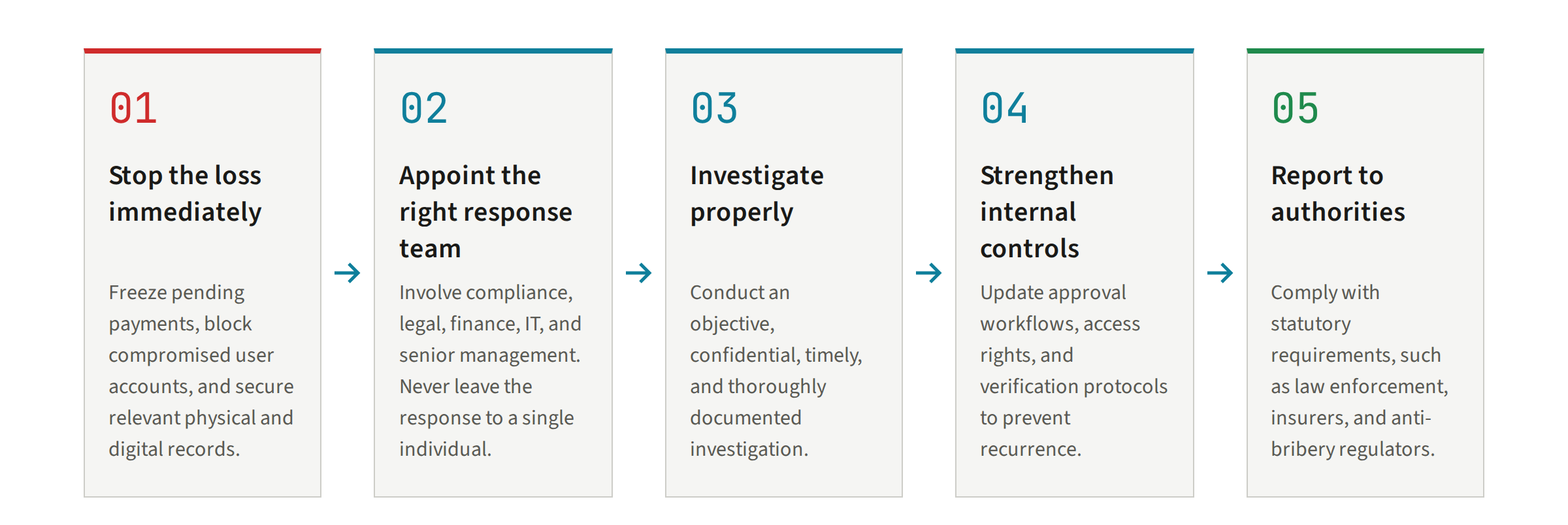
Key Principle: When fraud is suspected, act through process—not emotion, assumption, or delay.

Frequently asked questions

What is Authorised Push Payment (APP) fraud in shipping?

APP fraud occurs when a fraudster tricks an employee into manually transferring funds to an unauthorized bank account, often by sending fraudulent emails that pretend to be from a verified supplier updating their bank details.

What should I do if I receive an urgent email to change payment details?

Never process the change based on email alone. Pause immediately and verify the request using a separate, pre-established trusted communication channel (such as calling a verified phone number).

How does cyber security connect to fraud prevention onboard?

Cyber threats like spear-phishing, social engineering, and unauthorized USB devices are digital gateways for financial and operational fraud. Securing digital endpoints is a direct component of fraud prevention.

Fortify Your Fleet Against Fraud
with Maritime Trainer

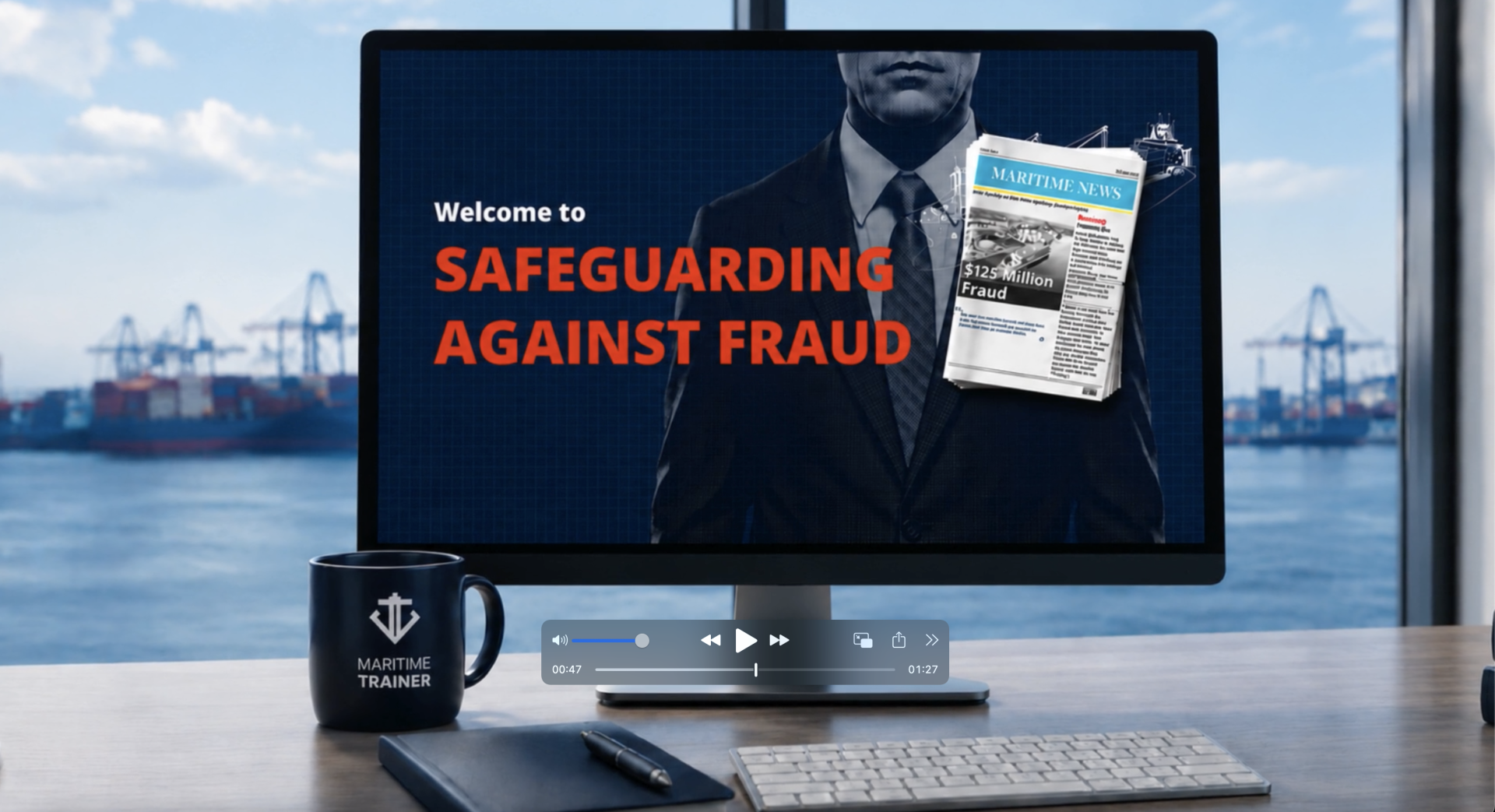
Fraud prevention depends as much on vigilant people as it does on financial software. Maritime Trainer’s digital Safeguarding Against Fraud in Maritime Operations course delivers interactive, scenario-based learning to help crews and shore managers spot red flags, enforce controls, and act before damage occurs.