
Transition from Regulations to a Competency Ecosystem
Aug 5
/
Capt. Berk Zincir
The new era in shipping is talking about competencies, not courses. The competitive advantage of the future will belong to organizations that can cultivate a workforce that does not merely comply with regulations, but makes sound decisions, manages risk, and continuously evolves.
The question of the new era is no longer simply:
This shift transforms maritime training from a mere compliance activity into a learning ecosystem that directly impacts companies' safety performance and workforce quality, supporting measurable competency development.
Possessing a certificate alone does not guarantee that a seafarer will make the right decision during a critical operation. Safety on today's vessels is achieved not merely by possessing knowledge, but by converting that knowledge into the correct behavior under pressure.
Maritime training is therefore undergoing a quiet yet profound transformation. International regulations such as SOLAS, MARPOL, the ISM Code, and STCW still form the indispensable foundation of the industry. However, digitalization, decarbonization, automation, cyber risks, alternative fuel technologies, and the growing importance of the human element are redefining the fundamental objective of training.
"Has this training been completed?"
The real question is:
"Does this training ensure better decision-making on board, foster safer behaviors, and drive stronger operational performance?"
This shift transforms maritime training from a mere compliance activity into a learning ecosystem that directly impacts companies' safety performance and workforce quality, supporting measurable competency development.
STCW Forms the Common Foundation of Training, But Competency is Built Upon It
The STCW Convention is one of the most vital regulations establishing a common training and qualification baseline for global shipping. For decades, it has contributed significantly to safe ship operations by defining minimum standards for seafarers' knowledge, skills, and qualifications.
However, there is a critical distinction here: STCW is a baseline standard.
That means it is necessary and indispensable; yet, it alone does not guarantee operational excellence. It is important for an officer to complete the required courses, pass exams, and hold certifications. However, this alone does not prove that they will conduct a proper risk assessment during a complex operation, communicate effectively within a team, or exhibit appropriate leadership behavior under pressure.
That means it is necessary and indispensable; yet, it alone does not guarantee operational excellence. It is important for an officer to complete the required courses, pass exams, and hold certifications. However, this alone does not prove that they will conduct a proper risk assessment during a complex operation, communicate effectively within a team, or exhibit appropriate leadership behavior under pressure.

"Today, numerous maritime accident and incident investigations reveal that alongside technical knowledge gaps, human factors, communication failures, lack of situational awareness, leadership deficiencies, and weak risk perception play critical roles."
Therefore, industry expectations have moved beyond mere STCW compliance. The expectation now is to build layers of genuine operational competency, behavioral performance, and continuous development on top of this foundational standard.
A New Seafarer Profile is Being Defined
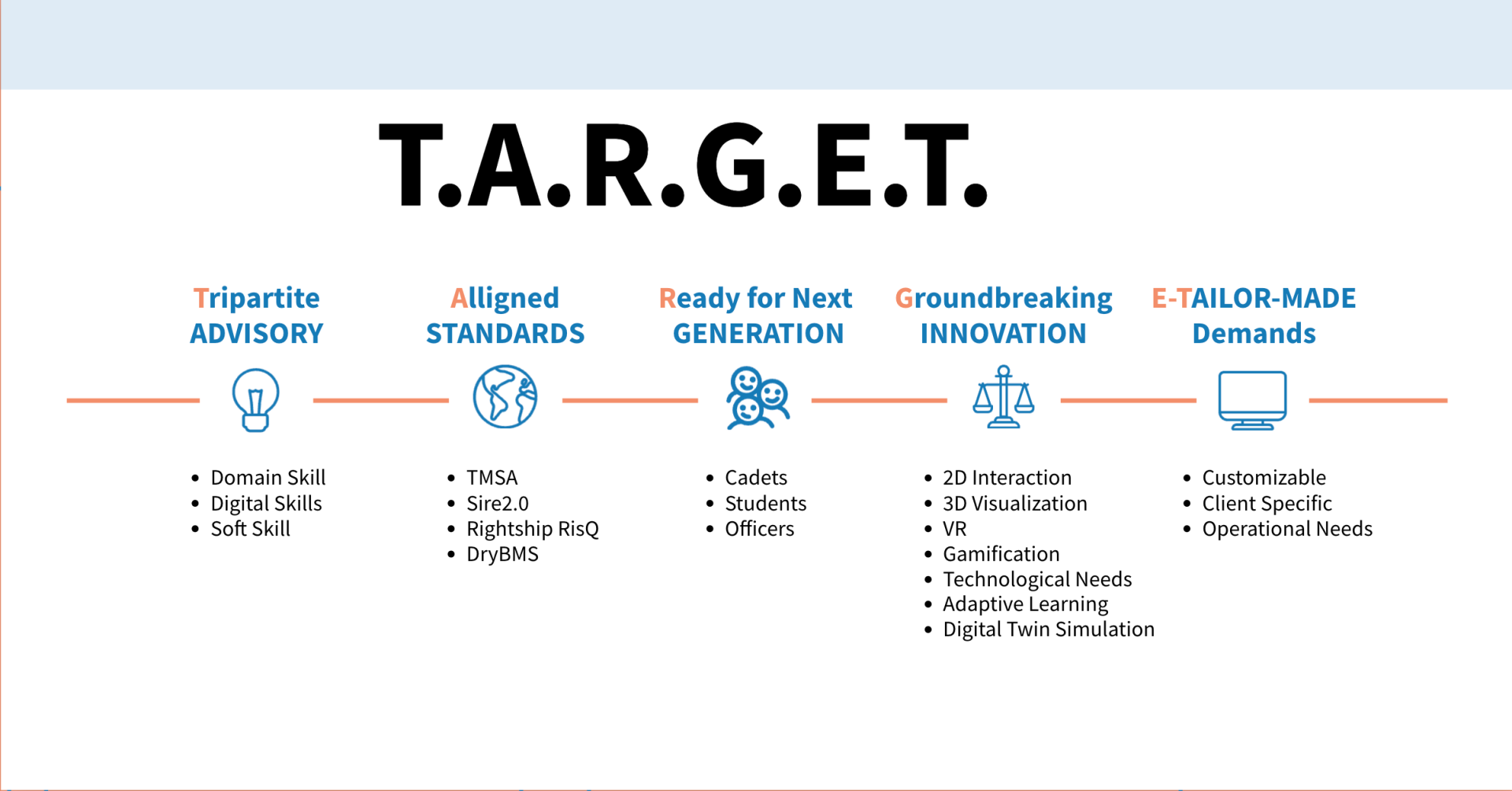
The IMO Future Skills initiatives, the Singapore Tripartite Advisory Panel (TAP) initiative, SIRE 2.0, the updated RISQ 3.2 (the international standard evaluating the quality management systems of training providers), revised training quality standards, and changing industry expectations all convey the same message:
Maritime training must now focus on competency development, not just knowledge transfer.
The IMO Future Skills efforts aim to outline the specific knowledge and skills the seafarer of the future must possess. These efforts cover not only technical training, but also new competency domains such as digital literacy, data analysis, automation systems, remote operations, alternative fuel technologies, cybersecurity, sustainability, and systems thinking.
Maritime professions are undergoing rapid transformation. An officer is no longer just someone who operates a radar, keeps a watch, or follows procedures. They are expected to be a professional who interprets data, works alongside automated systems, manages human-machine interaction, coordinates across disciplines, and makes safe decisions under high pressure.
The Tripartite Advisory Panel (TAP) for Future-ready Maritime Workforce report is one of the most striking studies published in the maritime sector in recent years. Released by the Singapore Maritime Foundation (SMF) in 2024, this report outlines a holistic transformation model for preparing the maritime workforce needed in 2030 and beyond, rather than merely updating course curricula.
In this context, the report defines three core competency domains for future maritime professionals:
- Technical and Operational (Domain) Competencies: Ship operations, safety management, engine and deck processes, international regulations, and operational risk management.
- Digital Competencies: Data literacy, automation systems, cybersecurity, AI applications, remote operations, and digital decision-support systems.
- Behavioral (Soft) Competencies: Leadership, communication, teamwork, cross-cultural collaboration, analytical thinking, decision-making under stress, and situational awareness.
Perhaps the report’s most noteworthy aspect is its recommendations regarding the educational system. TAP emphasizes that future-readiness is only possible by redesigning the approach to training. Accordingly, higher education institutions and training providers are advised to integrate more practical learning, short-term sea internships, industry experience, and modules targeting emerging technologies into their curricula. Furthermore, post-graduation professional growth should be supported through micro-credentials, modular training, and a lifelong learning approach.
The report re-examines career management alongside training programs. Sea and shore careers are no longer viewed as two independent paths; rather, they are seen as an integrated career ecosystem that feeds into one another. Facilitating transitions from sea to shore, establishing diverse career pathways, and retaining a skilled workforce within the industry are among the top priorities.
The approach presented by the Tripartite Advisory Panel represents a significant paradigm shift in maritime training. The debate is no longer just about which courses to teach. The key question is what competencies the future seafarer must possess and how these competencies can be sustainably developed.
SIRE 2.0 and RISQ 3.2: The Era of Behavior-Based Assessment
SIRE 2.0 (the new tanker inspection system developed by OCIMF) represents one of the most significant transformations in tanker inspection philosophy over the past two decades.
While previous inspection approaches primarily focused on procedures, records, documentation, and equipment, SIRE 2.0 places far greater emphasis on behaviors, decision-making processes, leadership, risk perception, and human factors.
Similarly, the updated RISQ 3.2 evaluates not only a training provider's capacity to deliver courses but also its quality management systems, instructor competencies, training effectiveness, and continuous improvement processes.
In today’s inspection approach, the following questions take center stage:
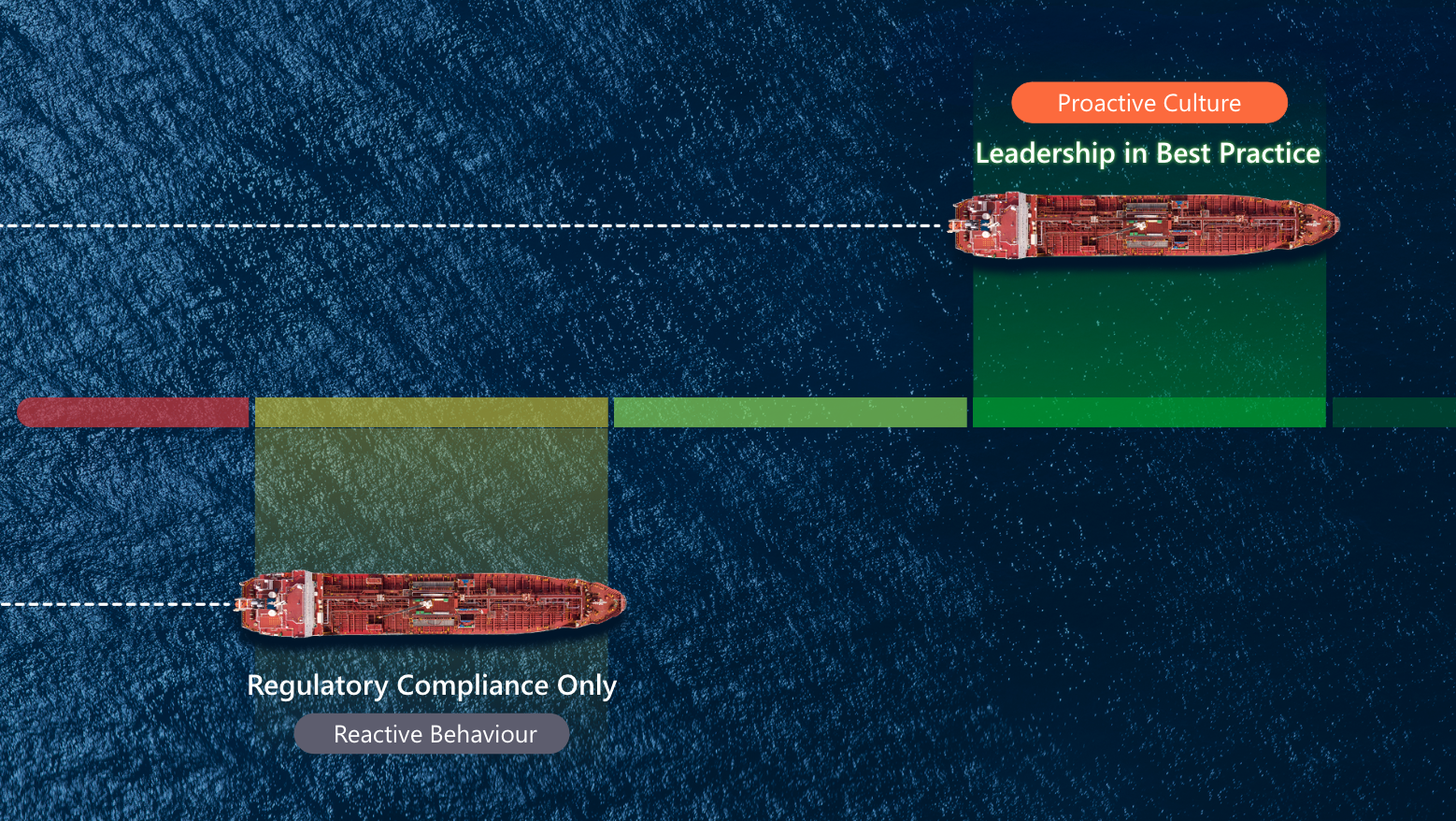
- Does the crew truly understand what they are doing?
- Can they explain why a risk matters?
- Are they executing procedures by rote memory, or do they act with an understanding of the operational logic?
- Do leadership, communication, and decision-making processes reinforce safe behaviors?
- Are human factors treated as an integral part of operational risk management?
Inspections no longer assess merely the presence of records but also whether the crew genuinely understands the operation, how they interpret risk, and how they justify their decisions.
This represents a major paradigm shift in training philosophy. The success of training will no longer be measured merely by the topics covered, but by the behaviors reflected in operations, decision quality, and performance indicators.
Taken together, these developments clearly indicate that maritime training globally is evolving from knowledge transfer to competency management.
How Should Training Content Change?
Viewing the new approach to maritime training merely as "more modern courses" is insufficient. The real change lies in training evolving from a standalone activity into a holistic competency ecosystem.
This ecosystem consists of five core steps:
Define: Which technical, digital, and behavioral competencies are required for which role?
Measure: What are the strengths and areas for growth of existing teams?
Develop: Which competencies will be supported through training, scenarios, simulations, and practical applications?
Apply: How will acquired knowledge be translated into real operational behavior?
Monitor: How will post-training performance, decision quality, and behavioral shifts be tracked?
For years, the traditional training model focused on a single question:
This is the fundamental question that will define the future of maritime training.
“Did the participant complete the training?”
The competency ecosystem asks a far more powerful question:
“Following this training, does the participant act more safely, correctly, and consciously during operations?”
This is the fundamental question that will define the future of maritime training.
In the new era, training design must extend far beyond theoretical knowledge delivered in a classroom. Training must enable participants to experience critical decision-making moments—those they might face during real operations—within a safe learning environment.
Therefore, maritime training should now be designed around these questions:
- Where on board will this knowledge be applied?
- What could be the operational consequences of a wrong decision?
- How will the participant experience this decision in a safe training environment?
- How will correct behavior be observed and measured?
This approach places scenario-based learning, simulation-supported applications, case studies, teamwork, decision-making exercises, behavioral observations, and performance assessments at the heart of training.
For example, firefighting, enclosed space entry, navigational watchkeeping, fuel bunkering/changeover, cyber incidents, or challenging communication scenarios should not be taught solely through procedural checklists.
The participant must encounter real operational elements—such as uncertainty, time pressure, incomplete information, team coordination, and risk perception—within a controlled training environment.
The participant must encounter real operational elements—such as uncertainty, time pressure, incomplete information, team coordination, and risk perception—within a controlled training environment.

"Because true competency is not just knowing the correct answer, but displaying the correct behavior at the right time and in the right manner."
From Training to Competency Management
For shipping companies, this transformation is not solely the concern of training departments. It is an organizational transformation that directly impacts safety management, human resources, fleet management, operations, quality systems, and sustainability strategies.
For companies wishing to adapt to this shift, the initial steps are clear:
Re-evaluate Training Matrices:
Training matrices must be re-evaluated not only against regulations, but also against operational risks. Which vessel type, operation, role, and human factor risk demands more training and observation? The answer to this question should form the bedrock of the training strategy.
Redefine Competencies:
Competencies should be redefined under technical, digital, and behavioral pillars. An employee should be evaluated not only by what certifications they hold, but by how well they perform their duties and how they execute under operational conditions.
Strengthen Post-Training Evaluation:
Attendance rates, completion percentages, and exam scores are important metrics, but they are not enough on their own. The true value of training emerges to the extent that it manifests in behavioral change and operational performance.
Embrace Modular and Continuous Learning:
Micro-learning, short digital modules, refresher training, simulations, and task-based learning pathways can shift training from one-off events into continuous development journeys throughout a seafarer's career.
Integrate Training Data into Decisions:
When training, competency, assessment, and performance data are analyzed together, companies can see not just who took which course, but where the fleet needs reinforcement.
Maritime Trainer’s Approach: From Course Provider to Competency Guide
This transformation in maritime training also redefines the role of training providers. Value no longer lies simply in offering more courses, but in helping companies accurately analyze which competencies they need, systematically develop those competencies, and measure the growth process.
As Maritime Trainer, we view this shift not merely as an update to course titles, but as a comprehensive transformation for the future of the maritime industry. In this new era, training must support regulatory compliance—but it should not stop there. The ultimate objective is to design learning experiences that mitigate operational risks, reinforce safe behaviors, and drive measurable competency growth.
This approach rests on four core principles:
From Regulatory Compliance to Risk Management:
International standards will remain the fundamental baseline for training. However, the ultimate goal of training design must be to reduce actual operational risks faced on ships.
From Knowledge Transfer to Behavioral Change:
Scenarios, case studies, simulations, and real operational examples must empower participants not just to acquire knowledge, but to translate that knowledge into correct behavior.
From Course Completion to Measurable Growth:
The success of training should not be evaluated solely by attendance rates or course counts, but by its contribution to decision-making skills, risk perception, team communication, and operational performance.Accordion Description
From One-Off Training to Continuous Competency Management:
Evolving roles, emerging technologies, and new risks throughout a maritime career necessitate lifelong learning and continuous improvement.
Therefore, Maritime Trainer's vision is not merely to deliver training, but to serve as a trusted knowledge and solution partner guiding maritime companies through their competency transformation.
The Future of Maritime training
The most crucial factor shaping maritime training over the next decade will not be technology alone. The true defining factor will be cultivating the workforce capable of utilizing these technologies safely, consciously, and effectively.
The maritime training of the future will be defined by five key features:
The maritime training of the future will be defined by five key features:
Personalized Learning:
Training content will be tailored to the participant’s experience, role, and development needs.
Practical Experience:
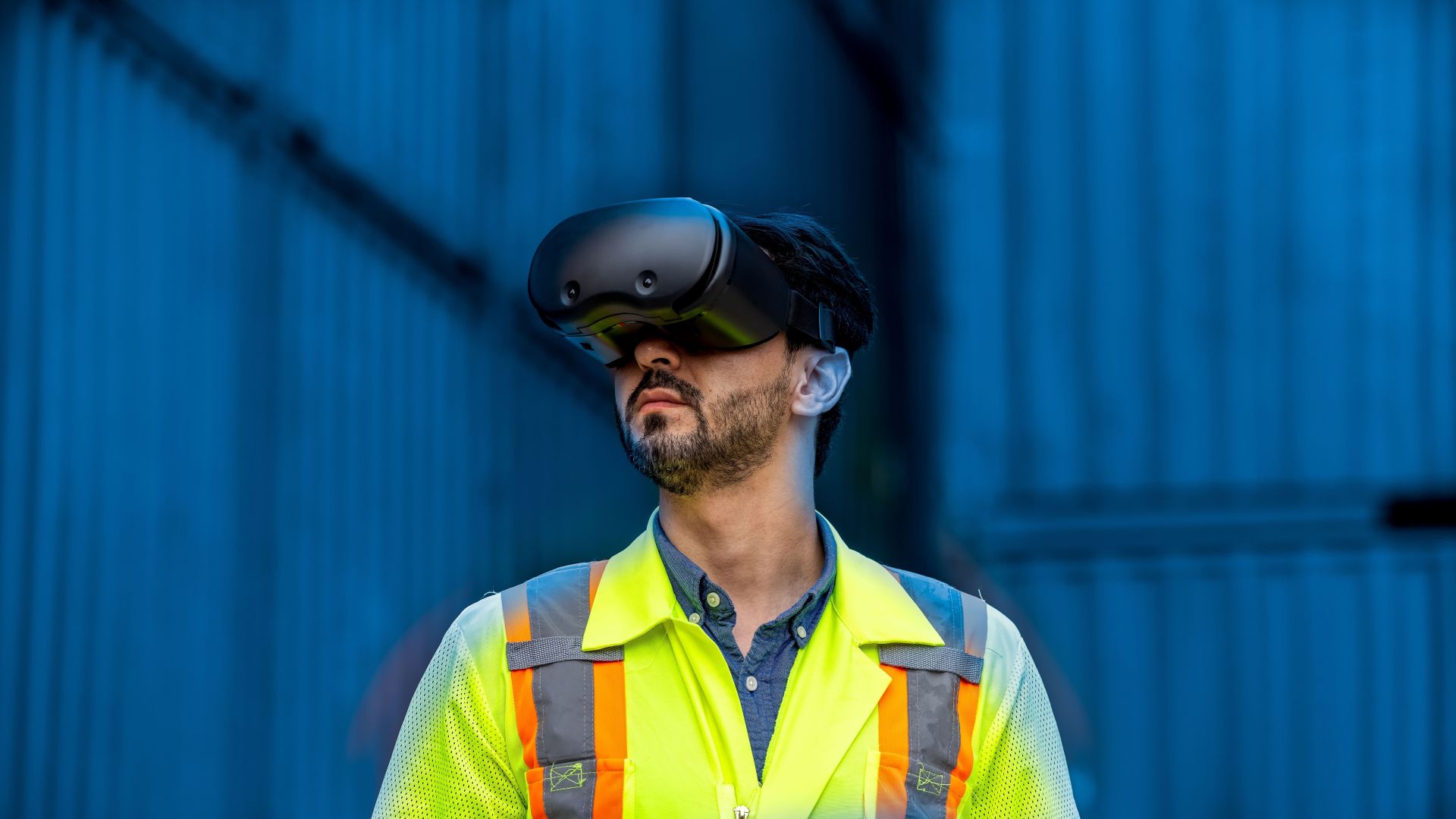
Simulators, Virtual Reality (VR), Augmented Reality (AR), and Digital Twin technologies will enable critical operations to be experienced in safe learning environments.
Performance-Oriented Evaluation:
Beyond attendance, decision-making quality, behavioral shifts, and practical execution skills will be measured.
Beyond Flexible and Modular Structure:
Micro-learning, short modules, and continuous refresher training will gain far greater significance.
Technical and Behavioral Balance:
Leadership, communication, team management, human factors, situational awareness, and safety culture will be integral components of technical training.
This transformation will redefine not only training programs but also the role that educational institutions play within the sector. Success will no longer be measured by the number of courses delivered, but by the competent talent brought into the industry and the contribution made to operational performance.
Conclusion
Today, the maritime industry is not merely trying to comply with new regulations; it is undergoing a far broader transformation. STCW updates, IMO Future Skills initiatives, the Tripartite Advisory Panel (TAP) initiative, SIRE 2.0, and RISQ 3.2 are not isolated developments. All of these efforts point toward the same goal: redefining the human workforce for a safe, sustainable, and resilient maritime sector.
Therefore, the success of educational institutions will no longer be measured by the number of courses they conduct, but by the competent talent they contribute to the sector. Maritime training is moving beyond being a mandatory activity for regulatory compliance to becoming a strategic investment area supporting operational excellence.
Educational institutions and shipping companies that adapt to this transformation in a timely manner will not only achieve compliance; they will also gain a key competitive advantage for the future. For what defines the future of maritime is not just new technologies, but the workforce capable of operating those technologies safely, consciously, and effectively.
"The most critical investment of the future is not made in ships or systems alone—it is made in human competency."
Capt. Berk ZİNCİR
Chief Project Officer, Maritime Trainer
Vetting Assurance Aligned With
SIRE 2.0 Expectations
Under the mature SIRE 2.0 vetting regime, long-term commercial success belongs to ship operators who turn their visible human element gaps into proactive, non-assertive, and automated assets of continuous growth.
BOCAV stands as your most powerful technical partner to mature your company safety culture while minimizing operational risk across your fleet. To proactively map your fleet's operational competencies, leverage the true power of assessor-driven mentoring, and secure total operational transparency, contact our maritime specialists today.
BOCAV stands as your most powerful technical partner to mature your company safety culture while minimizing operational risk across your fleet. To proactively map your fleet's operational competencies, leverage the true power of assessor-driven mentoring, and secure total operational transparency, contact our maritime specialists today.
— assess
Identify the "Why" Behind Human Performance
With 37% of negative observations driven by human factors, standard quizzes are no longer enough. We utilize Psychometric, Aptitude, Competency, and Maritime English testing, powered by vision analytics for proctoring and voice recognition for pronunciation evaluation. Analytics and competency mapping are also provided to pinpoint behavioral risks before they reach the deck.
— TRAIN
Beyond Paperwork: Immersive Readiness
We use storytelling, case studies, interactivity, 2D/3D visuals, real life accidents to change the behaviour of crew members by giving them the necessary skill sets and attitude through innovative learning tools. Our Digital Twin technology and VR-based serious games also give an immersive opportunity by providing a risk-free environment where crew can master safety-critical tasks through experience, addressing the 12.1% gap in "opportunity to learn.
— RETAIN
Sustaining Excellence Through
Maritime Trainer
Procedures fail when "custom and practice" take over, leading to 32.9% of errors. We bridge this gap by combining BOCAV with MTCare and Mentoring to ensure safety-critical habits are verified, nurtured, and ingrained for the long term, supported by necessary behaviours and skills. We support you to spot the gaps and act proactively with the help of our BI tool (MTData) that provides you insights, and enable you to make data-driven decisions.
Empty space, drag to resize
Join Our Newsletter
Subscribe to get our monthly health and safety bulletin free.

Innovative digital learning technology and services provider
Partnership
Become A Partner
Approved & Certified by Bureau Veritas
Flag
approved
We are proud to be member of



Write your awesome label here.