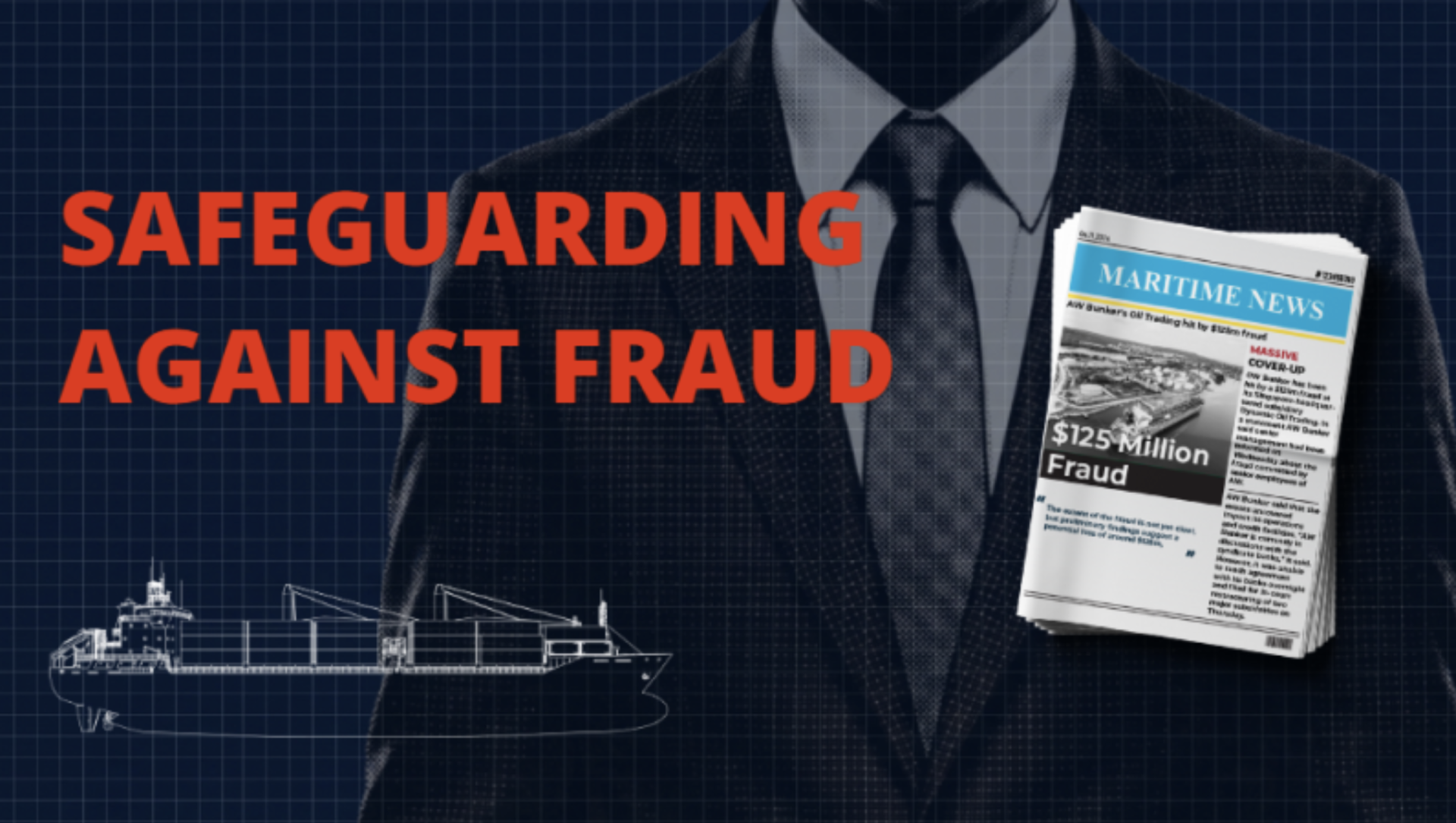
The Danger Hidden in Plain Sight
The Many Faces of Maritime Fraud
Why Awareness Alone Isn't Enough:
The "Recognise, Verify, Report" Framework
02
VERIFY IT:
Building a Human Firewall Onboard and Ashore
Actionable Steps
Frequently Asked Questions
What are the most common types of fraud in the maritime industry?
Maritime fraud commonly manifests through banking and invoice tampering (altering payment details), document forgery (fake Bills of Lading or port certificates), port-related bribery/extortion, and cyber-enabled phishing attacks targeting shipboard systems and shore communications.
How does invoice & banking fraud happen in the maritime industry?
Scammers intercept communications between ship managers and trusted vendors, replacing real payment details with fraudulent ones while keeping the invoice layout identical.
What is the "Recognise, Verify, Report" framework?
It is a 3-step operational security protocol where crew/staff identify irregularities, cross-check details via secondary channels (like phone verification), and report through official channels without direct confrontation.
Who should take the "Safeguarding Against Fraud" e-learning course?
Both onboard crew (Captains, Officers, Engineers) handling port/vendor paperwork and shore-based management (DPAs, procurement, finance, crew managers).
Is this course compatible with our company's LMS?
Yes, it is fully SCORM/xAPI compliant, allowing seamless integration into your existing maritime Learning Management System to track fleet-wide progress.
Write your awesome label here.
Ready to Protect Your Fleet Against Operational Fraud?
Don't wait for a missed red flag to turn into a costly operational disaster. Equip your crew and shore-based management with the practical skills needed to detect, verify, and report threats before they strike.
Explore Maritime Trainer’s specialized e-learning course: "Safeguarding Against Fraud."